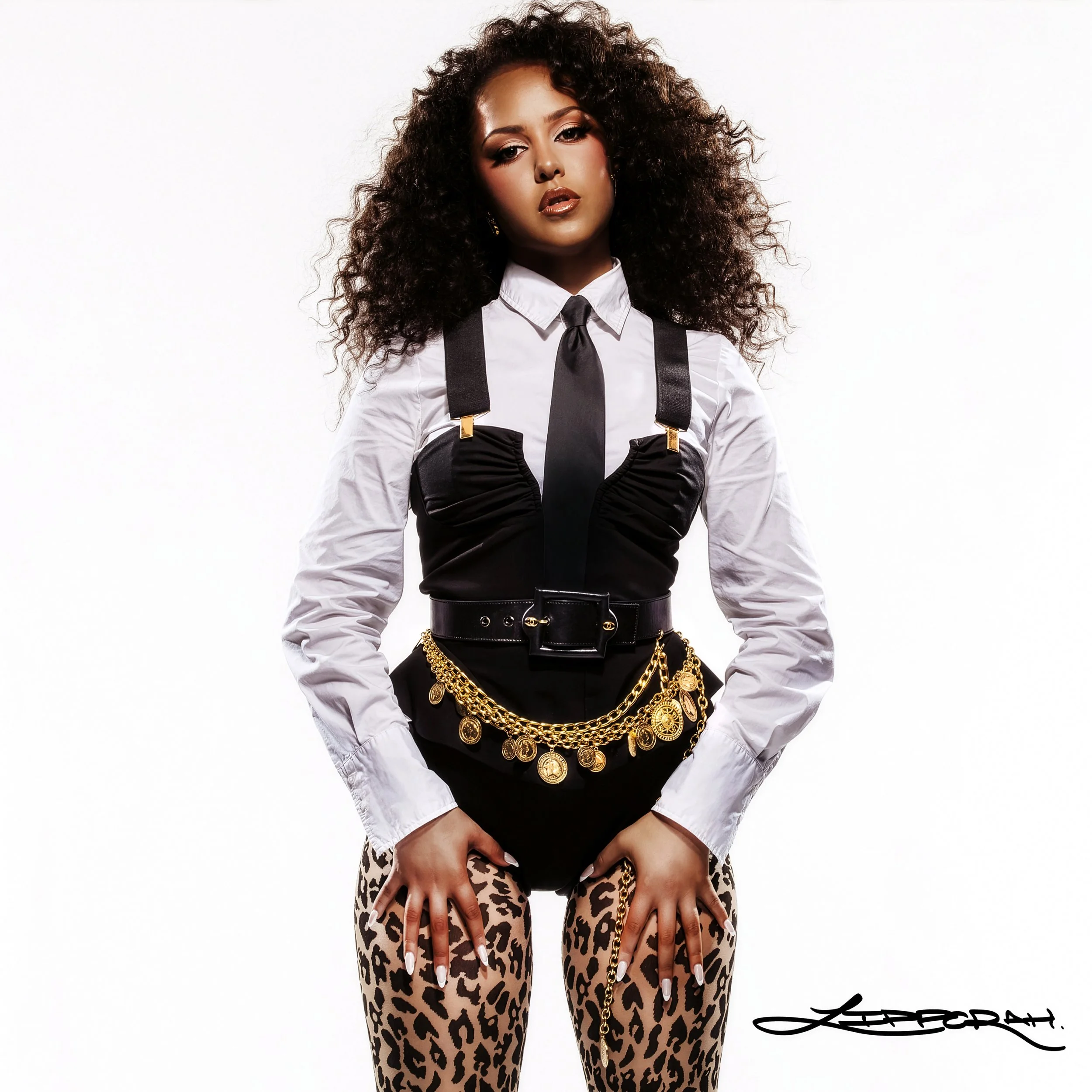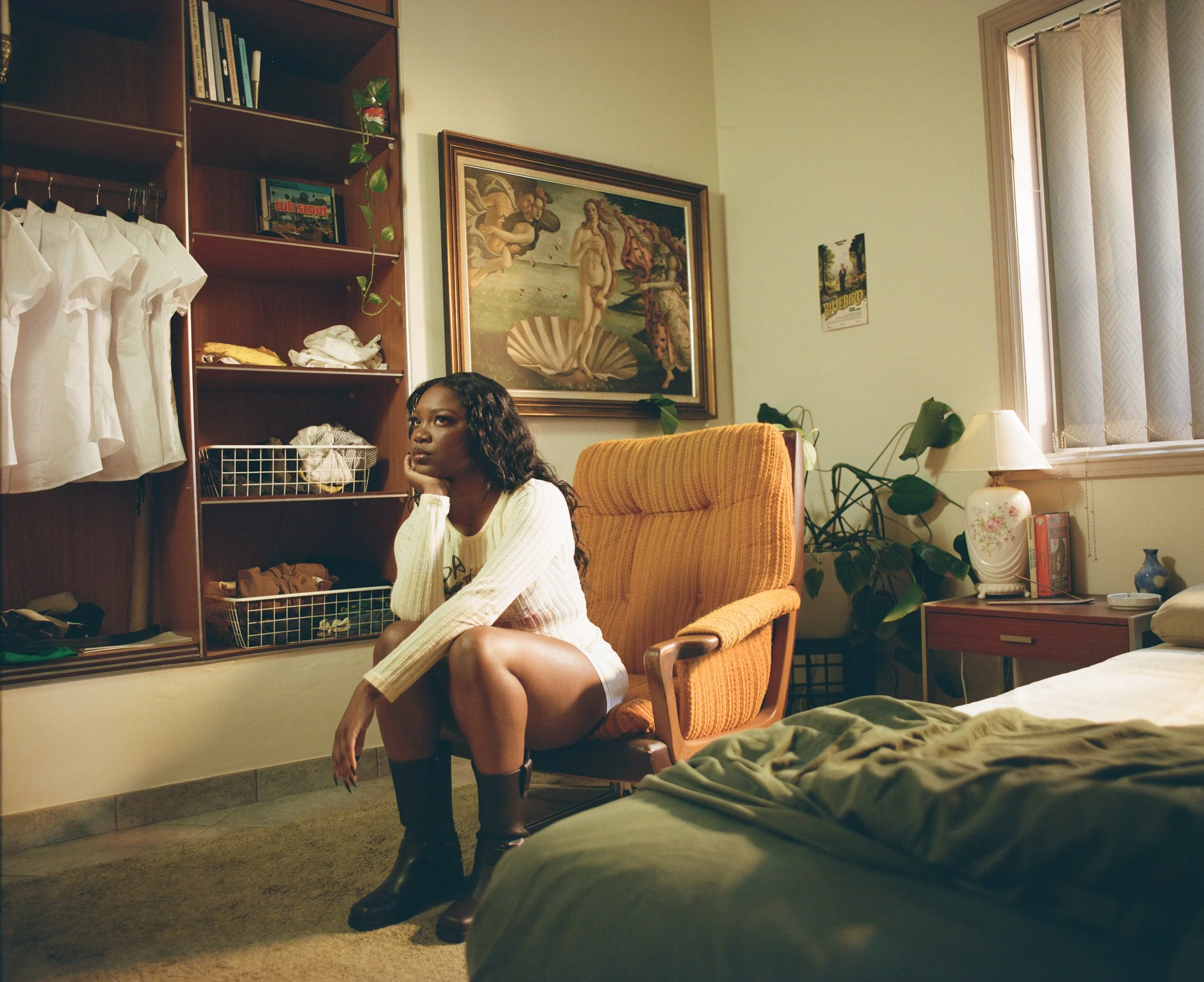
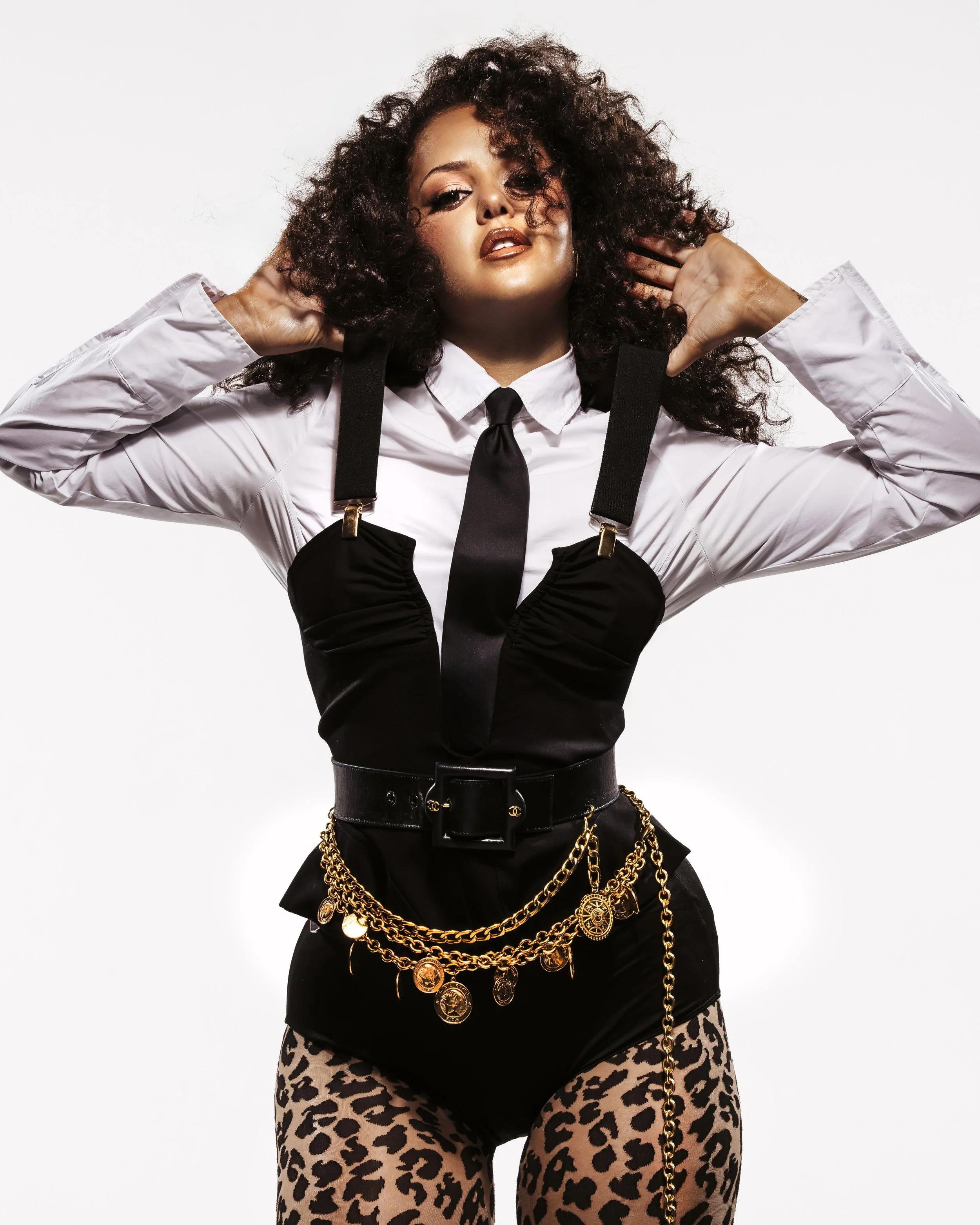
INTERVIEW: New talent Zipporah releases debut EP 'NAUNGU URUI'
Interview: Shalane Connors
Published: 6 February 2026
Samu and Suy woman Zipporah is an artist that has an inherent musicality that is evident from even the most cursory listen to her music. With just one single under her belt, her R&B-soul-jazz soundscape has a depth, confidence and elevation that is exceptional in an artist that, on paper, is brand new to releasing music.
Growing up in a family of professional entertainers, creativity, performance and both the glamour and grift that makes up the life of an artist was an integral part of her upbringing. However this didn’t mean launching her own career in music was a simple task, and finding your voice is perhaps the hardest part, particularly when you can’t see your own voice reflected in those around you.
“When you grow up in Australia, not necessarily surrounded by figures you can look up to or relate to, sometimes the influences you are presented, are people who are undeniably talented, but don’t speak to your spirit in your soul,” she says. “This was about creating the space for me to feel comfortable to express myself in the ways I had been wanting to. I’ve come across a group of people who absolutely adore the music that I adore, but also make it as well.”
Today Zipporah releases her debut mixtape NAUNGU URUI, the title a translation of her name - which appropriately means ‘songbird’ - in her grandmother’s language, Kalaw Kawaw Ya. Featuring five tracks, Zipporah worked with two ARIA award winning producers - Finbar Stuart (BOY SODA, Yawdoesitall) and Nikodimos (Genesis Owusu, Hiatus Kaiyote) - to bring her vision to life and the result is a moving, glorious collection that blends neo-soul with R&B, splashes of jazz and the sounds of her Zenadh Kes (Torres Strait) culture.
The mixtape opens with the new single, ‘Some Typa Way’. Dripping with attitude and a classic, early 2000s nostalgic R&B-soul sound, Zipporah sings of a relationship that looks perfect on the surface, but only results in a repetitive cycle of ghosting and disrespect. Zipporah delivers a stunning vocal performance setting out right from the beginning exactly what she is capable of.
‘Say It Again’ is a dreamy, sensual appeal to a lover to keep on doing what they are doing: ‘I’ll take you to my water / You can drink it all you like…the time is now.” The first single ‘Consequences' looks at what is almost the polar opposite of ‘Say It Again’ - a take down of a lover who treats Zipporah the wrong way. ‘I don’t wanna feel like I’m average…I can’t believe you don’t think this matters’ before the hook of the song ‘Don’t try me with that shit’. The song is perhaps the most jazz coded song on the mixtape, with beguiling brass, flute and keyboards peppered throughout.
‘Cycles’ starts with a gentle, semi-acoustic feel before transforming into a smooth, soulful song with a message of empowerment and rising above the struggles life throws at us. “All that you need is inside you…so break the chain / Let go of what’s before you.”
The mixtape closes on an emotive note with ‘Crying On My Shoulder’. Unpacking intergenerational trauma and building a new future, the jazz-soul soundscape becomes one with Zipporah’s gorgeous vocal, with her voice soaring to its highest register adding a fragility and vulnerability to the story in the lyrics.
NAUNGU URUI is a collection of music that pulls at your heart and soul. Zipporah has a way of drawing you right into her world with her music and it isn’t hard to see she has everything it takes to achieve major success in the coming years. We recently said down with her to find out all about the creation of NAUNGU URUI.
Hi Zipporah! Your debut mixtape NAUNGU URUI is out today. congratulations. How are you feeling about your first release being out there in the world?
It changes every day. A lot of my friends who don't really know how this works are like, ‘Oh, my God, this is going to be the best thing ever!’ Yes, I've worked really, really hard and put a lot of time and money and energy and love into this, but I still have to go to work tomorrow. So it's like a double life that you live, you keep moving, you keep pushing, but now I can lead this double life differently. For instance, last week I went into work for the first time since coming back after the New Year, and these two old blokes in the office start paying ‘Consequences’, and I got so embarrassed! I was like, this can't be a thing right now! I've got to embrace it, but, I don't have that secret identity anymore.
Yeah, it's vulnerable, right?
It is. It's like Superman's identity has been revealed - not that I'm Superman! But I feel like now I have things in concrete that I haven't had before. It's here,
You come from a very musical family to parents who are very prominent in the entertainment industry [Christine Anu and Rodger Corser]. I imagine that comes with a certain level of perceived expectation or pressure. How have you gone about finding your own voice in amongst that?
It's probably why it took a while for me to get here. People are releasing their demos on TikTok, SoundCloud, YouTube, and just finding a way to do it. I could have done that if I wanted to, but I was still very much figuring out what I wanted to sound like. What I was happy with, and what felt most consistent with how I've been feeling and want to feel for this next era.
There's definitely expectations. I mean, it's like any son of a football player, or anybody whose parents are significant, or have done great things - you naturally want to make them proud, or to make other people understand that their efforts and their time and their parenting has gone into something good, and not something bad.
[For me], it was more a matter of wanting to know what I sound like. It was like, I'm mum's backing singer, how do I ‘un-backing-singerise’ myself and start to write and to be comfortable with what I want? I was put in a lot of rooms where you walk in, the producer’s sitting on a chair, they swirl around and you can see what they've got on their monitor, and it's mum's Spotify page. That was very discouraging, because that's telling me that you really don't care what I sound like. There was a few of those tiny setbacks that affected my self esteem - well, shit, people don't actually really care, maybe they just want to cut in a song from someone's daughter and hopefully it does well.
I wanted to find my crew, and I wanted to find people who I felt inspired by and motivated by, people who I could relate to and could relate to me. That took time, and I'm glad that I didn't rush it, and I'm glad that I stuck to my guns.
Was there any specific moments where you were like “yep, that's me, that's my sound”?
It took for me to write ‘Some Typa Way’ for ‘Consequences’ to make sense. I was writing a bunch of different stuff, but I didn't really know what was going on, I was not really getting any direction from myself. When I wrote ‘Some Typa Way’ with Niko [Nikodimos Paleologoudias] he just was playing these chords that are definitely not your pop chords, definitely not anything that you would listen to with just those. And I was like, what is that? It started with the piano, and then he put the drums on, and then when he put the bass on it all just started to feel really good, when you feel it in your sternum. I was like I am obsessed with this.
It was the first time that I felt like I was taking charge, or I was just as much a part of the creation of this song, not just top lining. Niko's way of incorporating me and making me feel seen and heard and involved in the process is what also probably made me love the song ten times more as well.
Is this the direction that you expected you were going to go in, with the R&B-soul sound?
When I was younger I remember walking around the mall with my friends and all just being really dumb kids, and an old man came up behind us, and he goes, “gee, you've got a soulful voice, haven't you for a little white girl?” W thought it was the funniest thing in the world, but that's always stuck in my brain. Because I grew up singing musical theatre, opera, everything under the sun. I didn't really know what my voice sounded like, or I wanted it to sound like, because I sung and listened to every genre.
You also had classical training, did you have to unwork some of that to find your your own voice?
Yes, because being both classically and musical theatre trained, I didn't learn how to belt properly, comfortably, and didn't allow myself to belt until probably about a year and a half ago., Because I just was so trained not to. And it really, really did my head in, because all of my favourite singers have an exceptional belt, and I wanted that. And so with ‘Some Typa Way’, I flogged it to death. I just did anything and everything, and that just built this momentum and excitement and self assurance that the music I've always loved and admired and wanted to write, I am now capable of doing.
Let's talk about your songwriting process a little bit. You've been writing songs for a while, usually by yourself, is this your first time collaborating with other writers?
I’ve been writing since I was like 15 but no one saw, no one heard, no one ever had to. The first time I had to send someone a song that I’d written, it was for my year 12 Aboriginal Studies HSC assessment. My teacher was really encouraging me to do a song instead of me doing a report or something else. I was like, I don't want to do that, and she said ‘No, I think you should, I think you'll learn more about yourself as you do it’. So I learnt how to plug GarageBand into my laptop, putting the cord into the keyboard and doing my all of my own production, and then I sent it to her. She was like, ‘I'm not a music teacher, but kid that was great.’ I felt sick giving it to her, I hated anybody ever having access to me like that.
I wrote more throughout school, with different groups, and always being scared to give opinions or to do anything with the song, because I was like, that's like seeing me naked, I'm not letting you do that. So I had voice memos and notes galore of stuff that I just never wanted to show anyone. When I moved to Sydney, I just started writing with the keyboard that mum gave me and that's when I started to write more and be confident.
I still would say I'm very green to songwriting. I'm still very much learning, and I'm certainly not the best, that's for sure, but I've gotten to a place where I know I can communicate and I will be heard.
You've spoken about the importance for you of holding your heritage at the forefront of your career. How does that bleed into your music?
I'm not saying I have a massive platform, or a platform at all, but I have something. And if I didn't fully show the whole entirety of my identity or who I am, I think I would come to regret it. Anyone who truly knows me, knows that my cultural identity is the number one thing in my life. It's really important for me, for people who don't know who I am, or who my parents are, this might be their first introduction to anything Torres Strait Islander at all. I was scared, like, how are people going to receive it, but I just had to take a very long look at myself and go, you need to be able to represent yourself and other people, because that's your job.
On ‘Cycles’ and ‘Crying On My Shoulder’, for the extra production we put on, my mum's longtime friend and producer, David Bridey has collected over like 40 years, all of these soundscapes and stems of Melanesian traditional instruments. I asked him for the stems of all of the instruments because I want it to feel, not sound, like me. I want it to feel supportive of the stories that I'm telling. So I have traditional instruments on ‘Cycles’, and then at the end of ‘Crying On My Shoulder, I have a soundscape that I gave Nico from a video I took when I was on Saibai Island, which is the island my grandmother was born on. I didn't want it for anybody else, I wanted it for me.
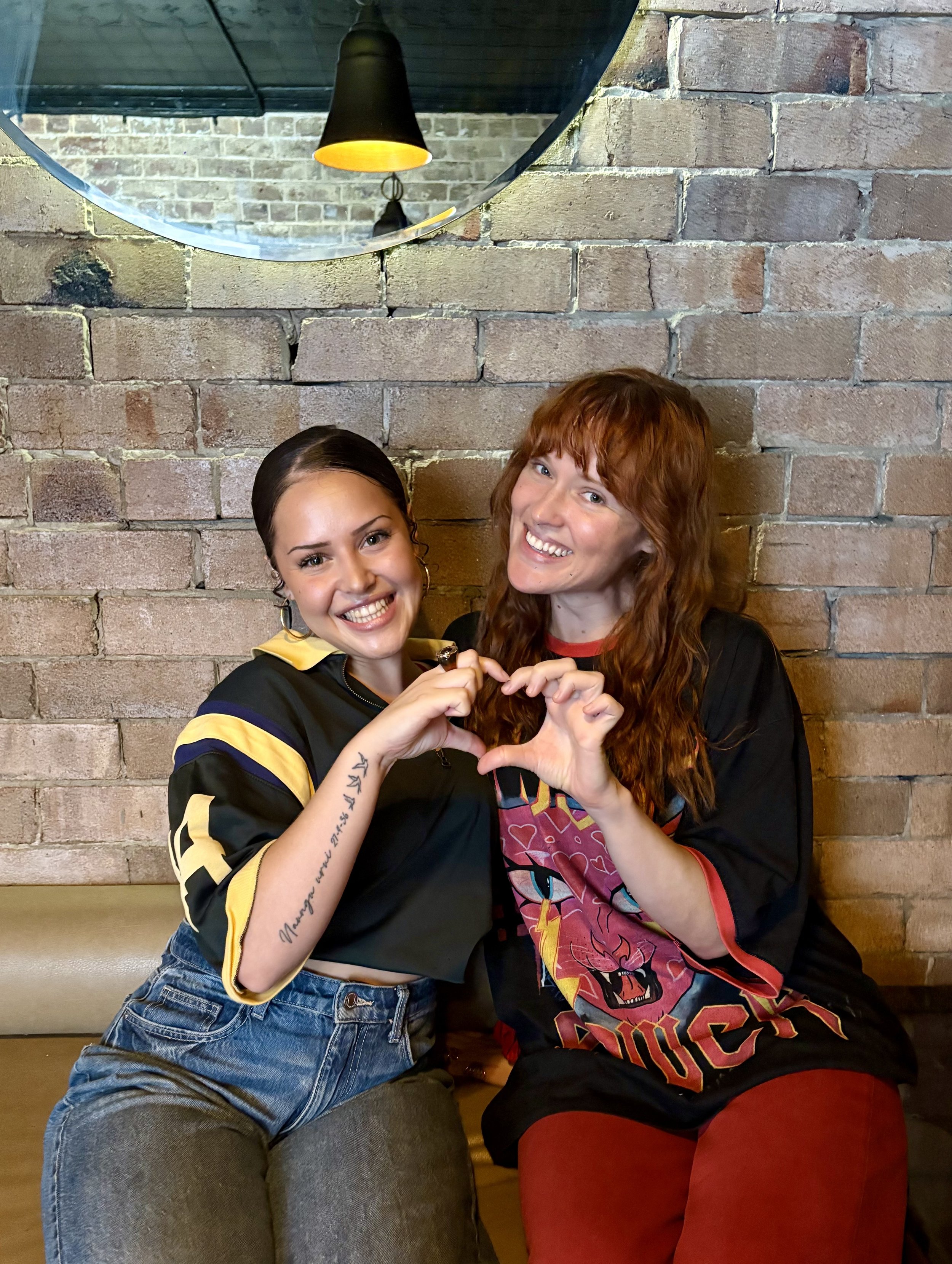
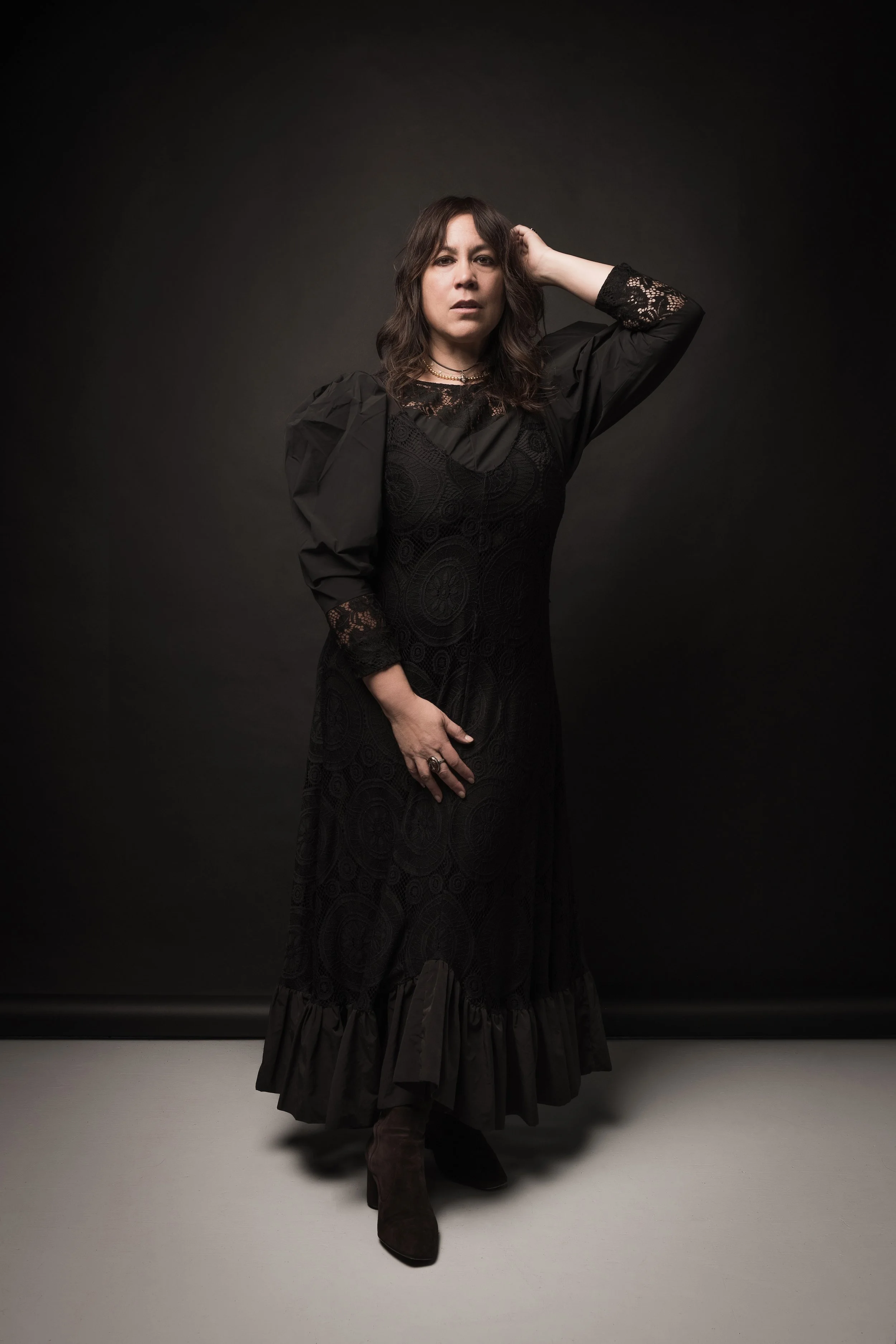
Zipporah with Women In Pop’s Shalane Connors
Speaking of songbirds who came before you, who were some of your female influences in the industry, or women who you feel paved the way for you?
My mum, it's very, very, very hard to not go past it. ButI guess the ones that go unspoken, I'm going to shout out all of the Aboriginal women songwriters, the Ruby Turners, Marlene Cummins, the women who forged paths when no one looked at Aboriginal people for anything, but also in genres of music that wasn't really accessible. Marlene Cummins is a legend in Redfern in the Aboriginal community, because she brought blues to Australia, and she's a phenomenal saxophonist.
It's also the women in music journalism, like Lola Forester, they forged ways for me to be able to have an interview with you and to be able to be given platforms because they were helping out their sisters and their community members in just as much of a way as the women who were writing the songs and performing them.
You got Stiff Gins who, they've been around just as long as mum, Aunty Emma Donovan, who was my favourite as a kid, and still is now, and seeing her resurgence and regrowth and getting her flowers now is really amazing. Casey Donovan, Jessica Mauboy, those two coming from TV shows and for showing the mainstream what we look like and who we are.
I can't not say that it's the women of the community that was raised in, I grew up in Redfern and also down in Wollongong. It's all the women that I was raised to call aunties and cousins and sisters, even though we're not blood related, they're still the women who raised me in in the industry.
You’ve got the mixtape out today but what else is coming up for you? Are you hitting the road, touring?
I'm hoping that we have some gigs coming up, because this has just been such a project to put together. I really want to write more and more and more. I'm trying to put together a series of shows for the launch, but I want to have full control over it and what it looks like, what it feels like. I want to create more of a feeling, less of a show. I want it to be an experience where it's reminiscent of my childhood, when I used to walk into the community centre, or at a wedding or someone's birthday in the park. I want people to come to the gig and feel as though they're not waiting in anticipation for the show to start, but they've walked into a family barbecue or family gathering. They see me over in the corner yearning to everyone else, and I might just go ‘I'm gonna sing a song now’. I don't want it to be a show, I want it to be an experience. And that takes time, and it takes organisation!
I want it to be community oriented as well, I think that's really important, especially as I'm starting out. Involve community as much as possible and to champion the people who have championed me my whole life. I'm currently just trying to create my perfect scenario.
NAUNGU URUI is out now, You can download and stream here.
Follow Zipporah on Instagram, TikTok and her website.