
INTERVIEW: Katie Noonan releases her 30th album 'Alone but All One': “I never meant to make this record, it was not on my to-do list in any way, shape, or form. I’m just following my instincts.”
Words: Jett Tattersall
Interview: Shalane Connors
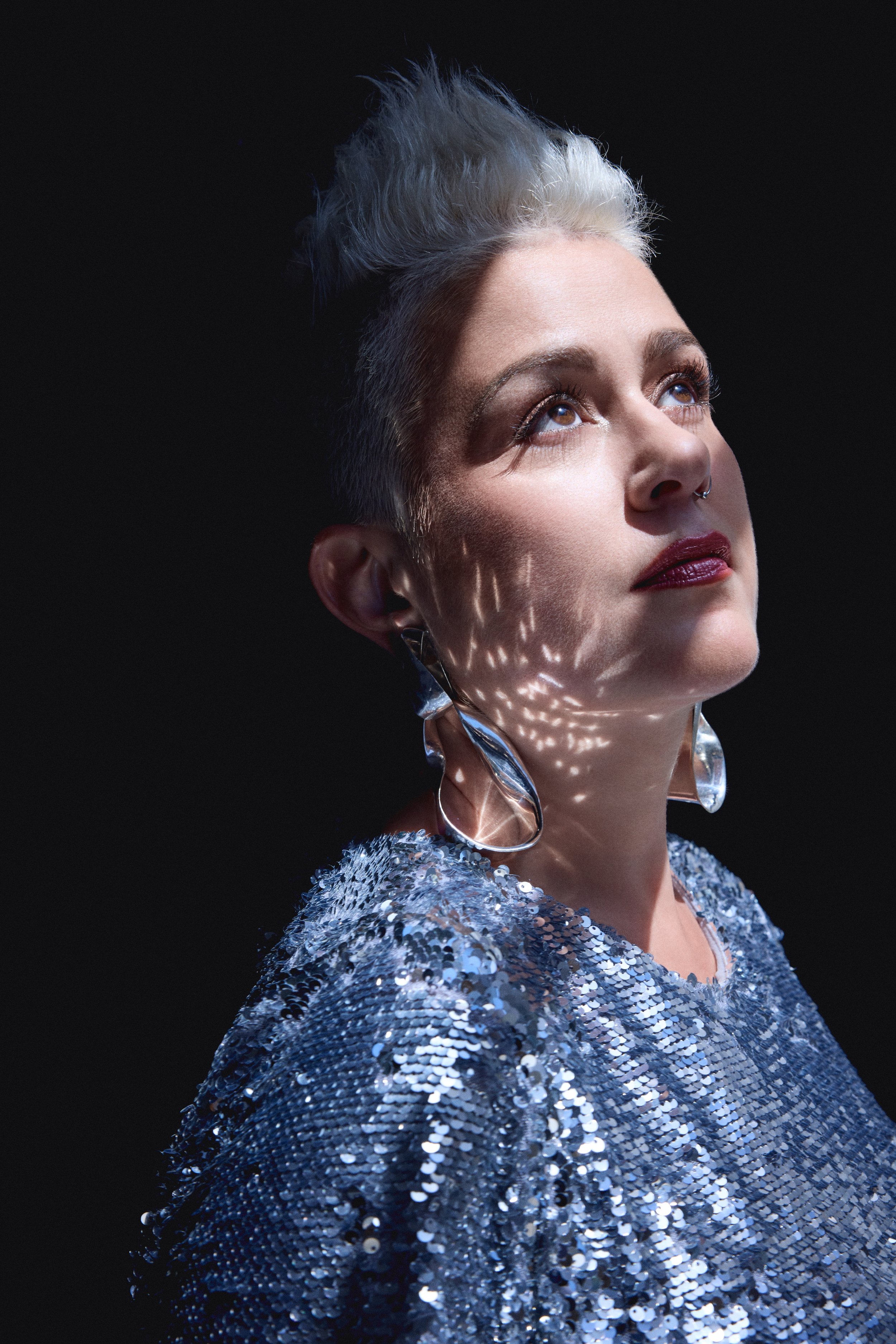
Image: Cybele Malinowski
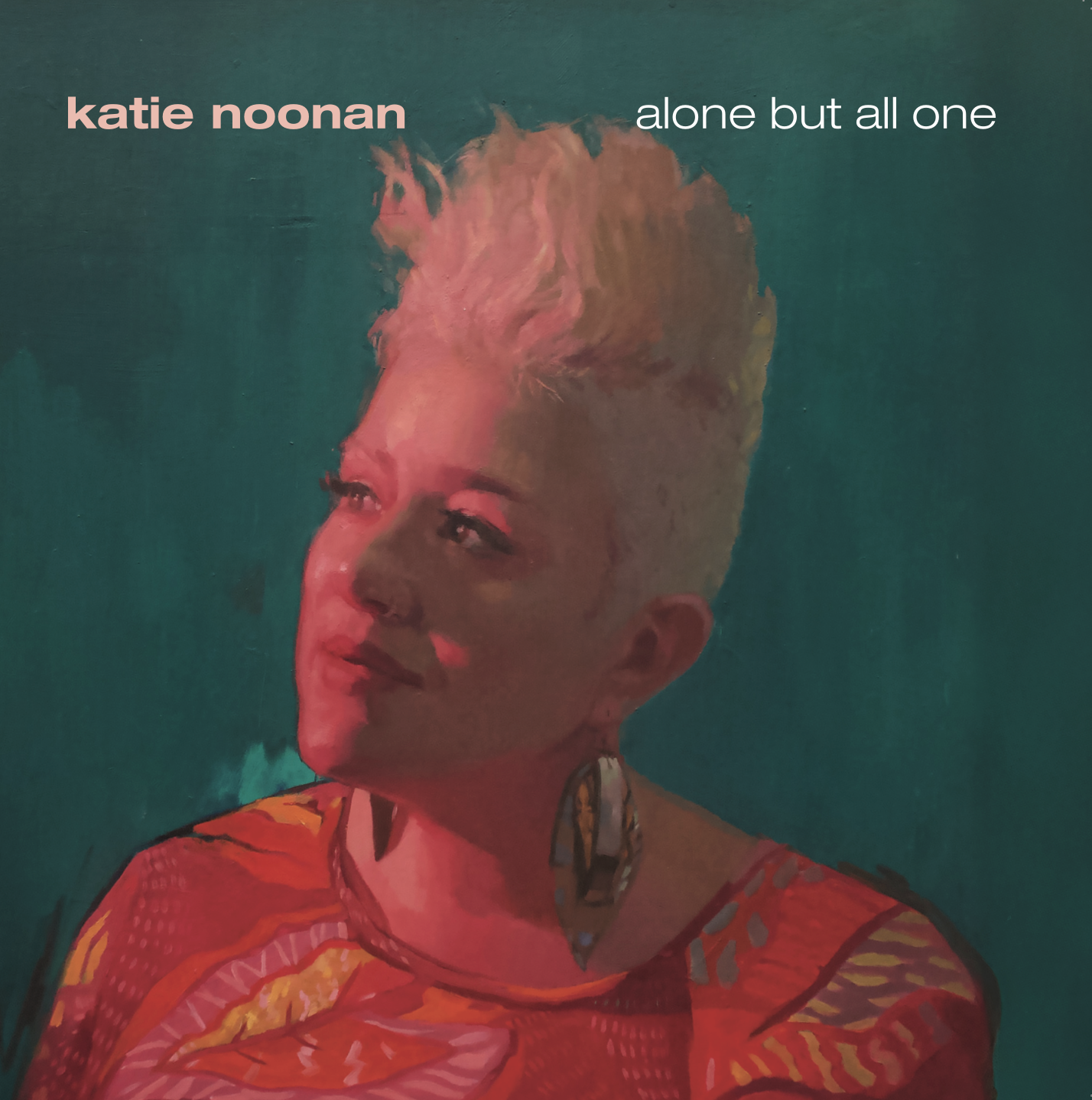
On Alone but All One, her landmark 30th studio album, five-time ARIA winner Katie Noonan has perhaps made her most communal work by first finding, then allowing herself to be completely alone. Recorded live in the stark stillness of her lounge room, this intimate, untethered, vulnerable collection rests on the bones of Noonan's piano and the raw, wooden textures of the River Suite String Quartet, leaving only enough space to house her crystalline voice. An album born from the dust-settling aftermath of a fractured marriage and personal bereavement; the sound of an artist spent. Completely cried out, yet stubbornly, beautifully, still here.
To remain saw Noonan navigating an identity forged in the breathless hollowing of a 26-year creative and personal partnership. “The sudden stillness left behind was very confronting and strange... It is about what happens quietly, after the noise.”
Sitting with that quiet means being scraped along the pebbles, across the bark, dragged - kicking - into the sun of a brand-new solo existence. This abrasive reality, the earthen forging of this new facet of self in time, hits immediately on the title track, ‘Alone but all one,’ where the grandiosity of Noonan's renowned power is stripped back to the unexpected sting of mundane bureaucracy when navigating a solo life. “Today was a day I got asked for my next of kin / I stood frozen as the tears bloomed out as I realised I didn’t have one anymore.”
That isolation takes on a haunted-villa-music-box quality on 'Together In Our Dream.' A deliciously untethered track - a chasing thought attached to a heart - it wanders through the early architecture of a life built together, where Noonan recalls "hanging from a noose when you cut me free." The melody never quite settles, like a spirit refusing to relinquish the house to its new owners.
But the current surges in lighter directions too. ‘In Your Shoes' suddenly clears, transforming into a daytime lullaby as simple, melodious, and hopeful as a coin tossed into a fountain. It is here, wrapping her heavy heart in the golden memories of before, and tying it to the archival love poems gifted by Trent Dalton, that Noonan delivers the album’s most enchanting wish, singing through the dark: “We’ll dance on the moon, as gravity pulls us through.”
Throughout her career, Noonan has operated as a master curator — chasing poems, championing other artists, and gathering communities into her orbit. The quiet miracle of Alone but All One is that, in stripping everything back to a single room and a single voice, she somehow calls forth one of the most collective, far-reaching records of her career.
In giving voice to the loneliness she never asked for, Katie Noonan quietly gathers a choir out of all of us.
We recently met with Noonan to talk all about the creation of this album
Hi Katie! Congratulations on the release of your 30th studio album Alone but All One, it is such an incredible collection of music.
I know, that’s bonkers. There’s been a lot go beautifully weird, wonderful synchronicity around this record. I never meant to write it. My dad died in March 2024 and then my marriage died in November 2024 and I left the matrimonial home on the sixth of January 2025, so it's been a pretty wild 18 months. No one goes into marriage thinking it's not going to last, obviously, and we were together for 26 years, which at age 48 is basically your whole adult life. Now after a big journey of grief and bereavement and sadness and loneliness and all of the things, I'm actually at a place of gratitude now. We had some amazing years.
I never intended to make this album, but that's just who I am, and songs fall out as they need to fall out, and they fell out. They were incredibly vulnerable, the most vulnerable ever, scarily so, to be honest. Part of the gratitude I feel stems from [author] Trent Dalton gifting me 156 pages of unpublished, exclusive text that were written between 2000 and 2026 in which he ruminates upon a lot of subjects. It's a lot of people watching, basically, as he caught the train from Darra to Bowen Hills when he started his job as an intern at Queensland Newspapers, and he was finding his voice.
The album’s not only for people who've gone through divorce, it's for anyone that's gone through a reset of life, because this is a reset. I just turned 49, It's my last year of my 40s, and this is the beginning of the next chapter of my life, which I'm looking forward to more and more.
You've always been incredibly open and honest through your music about your personal life, but this album, in particular, is deeply personal. How do you cope with the equal vulnerability as well as the catharsis of this album? Does it get easier throughout the years of doing this, or is it fresh every time you put something like this out in the world?
It does get easier. Also, that was my modus operandi from the get-go, to be as honest and as vulnerable as possible, and to try to not sound like anyone else. 30 years ago, I saw Jeff Buckley play, I was eighteen, and I was like, ‘whatever the heck that dude is doing, I want to do that. I don't know what it is, I can't define it, but it's very true and vulnerable and very real and it touches me in a way that other music doesn't.’ To hear a man say ‘a kingdom for a kiss upon your shoulder’, and ‘you are the tear that hangs inside my soul forever’, this was post grunge, which didn't involve a lot of lyrics like that.
It does get easier, but it also gets scarier, because this one involves children, and my children are my greatest achievement. The end of the album closes with the lyrics ‘you are all that I am, was, and will be’, and they are all that I am, was, and will be, and without them I can't. There were times when I was very dark, and I honestly couldn't imagine living without them. That's a pain I could not survive. I've hardly seen them, which is fine, everyone handles grief differently, and their whole world was blown apart, and I wasn't coping, but they have been amazing. They're such wonderful young men, and they're looking after each other.
I pretty much made myself sick just before the first single came out, ‘This Isn't What I Signed Up For’, which is achingly simple in its truth, and I was just really scared of what they would think and how it would affect them. And then it closes with ‘Nothing Woman’, which is one of the hardest songs I've ever written. It's different when there are other hearts involved.
It is certainly not a vindictive record. There is no vitriol about [ex-husband] Isaac in any way. There's no shame and blame, but there is admiration of the love that we did have, and it was a mighty love, and it was great for a long time, but essentially Covid broke us, and grief broke us. His father died, and then my father died, and then our industry died. The catatonically stressful pressure of being the sole financial provider for a family of four was the final straw, and I was so worried about our industry, I've always cared deeply about the greater ecosystem of the Australian music industry, because I've seen it behind and on the stage, and you know it's tough.
We haven't had a federal leader with the tenacity and passion to talk about the importance of the arts since Keating, really, and that was 30 years ago, which is pretty scary. It's a huge time of spiritual growth and questioning, and more than ever, we need music and theatre and art and fashion and sculptures and storytelling and poets and graphic designers and photographers and textile people and jewellery makers. My album's just a small contribution to that.
You made the decision to record this album in a very intimate and stripped back way in your living room with just your vocals, piano, and a string quartet. Talk me through that decision to record it in that way.
As I've gotten older, I've realised less is more. Ani DiFranco has been one of my sheroes for years, and she's got a great song that says half of learning what to say is learning what not to say, and half of learning what to play is learning what not to play. You start out as a young newbie, and you want to show off, and you want to hold these long notes, and as I've gotten older, the less notes the better. But the intensity, the intention behind the notes - you serve the music, you don't serve the ego, and you serve the story, and so that was a necessity.
I bought a beautiful 1962 classic little three bedroom post war house, and it has beautiful hardwood floors and ceilings, perfect for acoustic instruments made of wood, the strings and my beautiful Kawai piano. The house has been empty for a very long time and lonely, and so to have it full of people at the top of their field, some of the greatest string players in Australia and the world, in my lounge room, was beautiful.
I'm not interested in perfect music, music nowadays is so homogenised, I've never used auto tune. I very rarely record to click.. So to bring it back to my home, because it was a new home, a very empty home, and to bring some love and music making and friendship into that space.
Over your 30 years in this industry, alongside your output as an artist, you've also pivoted quite naturally into a role of advocacy within the industry, specifically on issues of support and much needed funding and safety nets for working artists, and championing First Nations acts and local support acts, especially within festival lineup frameworks. What was your initial instigation in moving into this role of responsibility within the industry?
Generally, when I started, I was almost always the only woman on the bill, if there was another woman, it was Ella Hooper from Killing Heidi, or possibly Deborah Conway, Sarah McLeod, Claire Bowditch, Janet from Spiderbait, and Stephanie from Something For Kate. There were a very small crew of us all doing our own things, and then a little after me came a whole bunch of fabulous women from Brisbane, Kate Miller-Heidke, Meg Washington, Dami Im. Certainly at the upper echelons of the corporate world, there were very few women. So whenever I had the opportunity, I always took women on the road with me. I like to bring women to the stage, and I have never ever understood jealousy or comparisons. We all have our story to tell. No one sounds like Kate Ceberano, no one sounds like Deborah Conway, no one sounds like Renee Geyer. They're all freaking amazing, I can only be inspired by them.
I think there's a fundamental problem in Australia where we don't believe we're freaking amazing, and we are. The value of our music has been decimated to pretty much nothing in terms of product and so the only way to make a living is touring and now we're in a cost of living crisis, it's a very saturated market, and venues are closing left, right, and centre. There used to be a law where you had to have a local act as the opening act, for touring artists. We played for stadiums supporting people like Macy Gray and Coldplay, and that's how we slowly, organically built our following. That's no longer a possibility. Taylor Swift's tour made an unbelievable amount of money, and listen, I love Tay Tay, but that support act should 100% been an Australian. What they would have earned in royalties alone would have allowed them to make a few records. There's just a fundamental lack of a unified voice.
What do you see as the major pitfalls in the industry today, and what do you think has changed in your time, if anything?
There's a fundamental infrastructural problem in that there are no enforced quotas that insist on Australian content to a degree that they need to be. We essentially are a Judeo-Christian society still that measure ourselves by the existence of four cultural constructs: a theatre company, a ballet company, an opera company, and an orchestra, and I love all those things, but they were the traditional constructs of the 17th and 18th century - and it's the 21st century. What's the new paradigm of how we measure who we are. Another version of Aida or Carmen, or Don Giovanni, or Madama Butterfly, which I adore, but if we just keep on doing them, where are our stories?
Australian radio doesn't sound Australian. The content quotas are depressingly low. There is no gender parity if they do play it. It's generally Barnesy, Farnesy and LRB, who I love, but those fellas are in their 70s, and the reason why we don't have the next generation of them being played is because there are no quotas. There's no shortage of unbelievable artists, so I think quotas really is the only thing that can fix that problem.
I really despair for the next generation, because they ask me for advice, and I'm like, I wish I could tell you, but your story matters. Your voice is beautiful. No one sounds like you. Build it, and they will come. It's highly unlikely that I will chart with this record, because I'm a 49 year old woman who doesn't fit the traditional box of whatever, and that's a slightly a bitter pill to solo, but it's a reality. Going from being number one and selling triple platinum to not doing that. But I'm so grateful that I have been able to be a full-time musician, and that's thanks to my incredible audience, who keep on following my random meanderings through my various projects, and just keep on dreaming big. Your story matters, that's the main thing.
You mentioned some women who were part of your support network or mentors to you in your foundational years. After your huge career, do you now play mentor to young, up and coming artists?
Yes, at any opportunity. I have chats and Zooms, it's an important part of my job that I've done for years. Because I’m lucky enough to be a full time musician, my charity work is very important, my Eumundi School of Music has provided about 300 scholarships to kids for music lessons, it's our 10th year this year which is very cool.
Dame Quentin Bryce is one of my sheroes, the first woman to teach law at UQ, the woman who fought for childcare, she was part of the Not Now Not Ever report into the domestic violence, she's my hero on so many levels, and a mum of five. Being a musician and being a mum was hard, there were not many of us that were mums, it was an era where it was very much a boys club. So I've made it my priority to definitely encourage new mums, pregnant mums, mums at any age who want to come back into songwriting. Mums might have gone and had four kids, and then in their 40s and 50s, went, ‘Hang on, I've got stuff to say that's important’.
The industry is pretty ageist, particularly against women.. My main passion is more women in positions of power as artistic directors and chairs on boards and CEOs, and because those positions are the places where you can make systemic change. Thankfully, we've got Jenny Morris at APRA, and we have Annabelle Herd and Natalie Waller at ARIA, and that has changed a lot, but there's still a lot more work to do. If you do want to be a musician, you do need to be a businesswoman, that's just part of the gig.
Has your relationship to music, and how you feel about music, and your approach to songwriting, changed across your career? I think when music becomes your job, it shifts from just an artistic venture to being something that is feeding you. How did you handle that?
It's always just an artistic venture, and the minute it's not, give up. If you do it for any other reason other than the love, or the need, you've lost. I've never made music for the purpose of commercial success, ever, and I never would. I just have to make this music. I never meant to make this record, it was not on my to-do list in any way, shape, or form. I’m just following my instincts, and trying to be as true to myself as possible. The only thing I would say would be definitely setting aside time for writing and prioritising it as work. Iit's work, it's important, and if you don't put aside time for it, life will take over, and you just won't write. You have to prioritise time, and it doesn't matter what you write, just anything is better than nothing. Words written on a page are always better than a blank page.
Who are some up and coming Australian female artists that you want to give a shout out and a platform to?
Alys Ffion is amazing, she's opening for me in Pomona. Layla Havana, who's my mentee, a First Nations artist from Gubbi Gubbi country is incredible. She has a debut EP called Beneath the Surface, which she put out when she was 15. These are boys, but a young band from the Sunshine Coast called Soleil, they're our alumni band for our School of Music this year. Not up and coming, but amazing, Georgia Fields, I adore. She's incredible. There's so many that I mean, but those are certainly three of my absolute faves.
What's coming up for you next? I believe you’ve got an album tour?
I've actually got 10 more new songs that I'm maybe recording next week, which is bizarre. My tour starts on the 10th of July, in my hometown of Brisbane and we finish in Melbourne. We've announced an extensive regional tour, which is about 27 dates all through spring starts at Pomona, which is exciting, it means I get to sleep in my own bed with my doggy! I will have some string quartets from regional Queensland and New South Wales play with me, which I'm very excited about.
Obviously, my Eumundi School Of Music is very, very important and our 10 year concert is on August 22. The amazing Kate Miller-Heidke is our headline act with her new album, The Kiss and the Abyss, and she'll be playing with our kids and our alumni kids from the last 10 years in a string section.
AVÉ is a very important project for me. Unfortunately, there is no professional performing arts organisation in Australia that currently pays a singer to be a singer, which I think is a grave error, and I want to try to change that with big bold dreams.
And just continuing writing more records and touring and embracing the second chapter of my life. I've also got another project that I want to do, because my dad had such a beautiful death, and we all got to sing with him and sing him to death, basically, and pray with him. I thought ‘I wish other people could have this’, so that's another idea I have somehow of working in the palliative care space. The last thing to go are your ears, and using music as a super beautiful, powerful tool for families to say goodbye, I just need to find an alternate me and an alternate life for all the ideas I have!
Alone But All One is out now. You can buy and stream here.
Follow Katie Noonan on Instagram, Facebook and YouTube.
ALONE BUT ALL ONE AUSTRALIAN TOUR DATES
10 July – Old Museum – Concert Hall, Brisbane, QLD - Turrbul Jagera Country
11 & 12 July - Art Gallery of NSW, Sydney, NSW - Gadigal Country
16 July – The Rechabite, Perth, WA - Whadjuk Noongar Country
17 July – Camelot Arts Club, Mosman Park, WA - Whadjuk Noongar Country
18 July– Miss Chow’s, Margaret River, WA - Wadandi Boodja Country
30 July– The Gov, Adelaide, SA - Kaurna Country
1 August – Melbourne Recital Centre, Melbourne, VIC – Naarm
26 September – Majestic Theatre, Pomona, QLD – Gubbi Gubbi Country ️
9 October– Karralyka Arts Centre, Ringwood, VIC – Wurundjeri Country
10 October – Berninneit, Cowes, VIC - Boonwurrung Country
14 October – Coledale RSL, Coledale, NSW – Dharawal Country
15 October – Bondi Pavillion Theatre, Bondi, NSW – Gadigal Country
16 October – Concert Hall, The Joan, Penrith, NSW – Dharug Country
17 October – The Estate, Camden, NSW - Dharug Country
22 October – Brunswick Picture House, Brunswick Heads, NSW – Bundjalung Country
23 October – Armitage Centre, Toowoomba, QLD – Giabal Country
24 October – The J Noosa, Noosa – Gubbi Gubbi Country
28 October – Jetty Memorial Theatre, Coffs Harbour, NSW – Gumbaynggirr Country
29 October – Old Cheese Factory, Frederickton, NSW – Thunggutti Country
31 October – Armidale Playhouse, Armidale, NSW – Anaiwan Country
6 November – Geelong Arts Centre, Geelong, VIC – Wadawurrung Country
7 November – Theatre Royal, Castlemaine, VIC – Dja Dja Wurrung Country
13 November – Ian Potter Recital Hall, Theatre Royal, Hobart, TAS – Palawa Country
14 November – The Royal Oak, Launceston, TAS – Palawa Country
15 November – Wilder Tasmania, Gowrie Park, TAS – Palawa Country
20 November – Avoca Beach Theatre, Avoca Beach, NSW – Darkinjung Country
21 November – Flow Bar, Old Bar, NSW – Biripi Country
27 November – Milton Theatre, Milton, NSW – Yuin Country
28 November – Belconnen Arts Centre, Canberra, ACT – Ngunnawal Country
29 November – Riverina Playhouse, Wagga Wagga, NSW – Wiradjuri Country