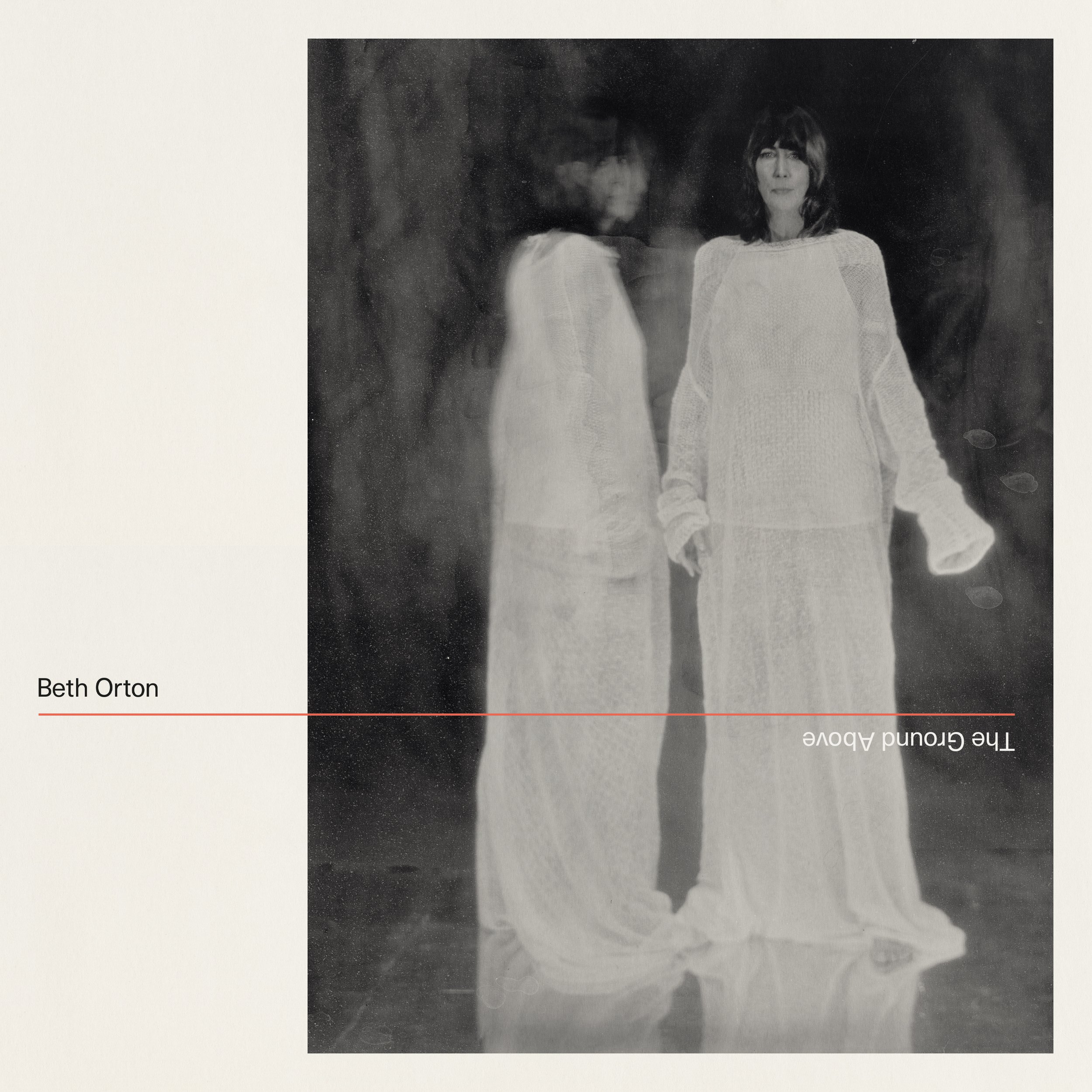
INTERVIEW: Beth Orton on the release of her 9th studio album 'The Ground Above': "There's a simplicity to what I do...I really do love writing a song."
Words & interview: Jett Tattersall
Image: Kasia Wozniak
Published: 6 July
The Ground Above, Beth Orton’s magnificent new album, claws into the inner meat as it climbs from your belly, whips through the currents of an aorta, and surges into your brain. It is an album to be listened to while submerged: in a bath, in a pit of earth, under a blanket, in a mood. To listen to it is to understand that Orton finds oxygen and grows a trove of opposable joints where others suffocate and collapse under scrutiny.
Ducking and weaving from the spectral, floating, unencumbered dreamscapes of her recent past, The Ground Above finds Orton pushing past the silent stars, through the clouds, and tearing at the turf, planting feet built to bear the weight of the universe. By taking the helm of production, she has given the music time, space, and permission for those niggling, wordless hitches to expand, implode, and metamorphose into something completely her own. The result is an album that treats her current state of now as an urgent, melodious intake of breath.
Orton’s persistence in working laterally within her own field of melting clocks and piano keys is the defining metronome of the album. “Nothing on the record has been rushed,” Orton says as she notes that each track - its own heartbeat, DNA strand, cells, and ideas - is intentionally “strewn with paradox.”
This friction is tactile in ‘Cigarette Curls’, the beat and melody of a humid, sleepless summer night dictate the pace of a track whose soul is constructed from the bones of an early, formative friendship. Where we might usually expect soft nostalgia and salt-tracked cheeks, Orton instead layers the track with gravel — emotionally pitting the reckless abandon of youth against the immediate rupture of her present.
The debris of that collision echoes straight into ‘I’ll Miss You,’ a melodically nostalgic piece, evoking the trip-hop and fever dreams of Orton’s origins in 90s alt-rock mixtapes, which hovers, in a sliver carved into the fabric of time, on the knife’s edge of loss. It’s a love song, a goodbye, an apology, an excuse. Encompassing the limitless and drowning capabilities of love, it plays with the ultimate paradox of intimacy: a love that is fierce and deep, but no longer enough if it requires self-abandonment.
Protecting these delicate, jagged spaces required absolute autonomy. Three decades into a career shaped by instinct rather than expectation, Orton bypassed a traditional studio system. The self-taught music maker by ear retreated to explore, trust, and hone those instincts away from others' opinions. It's an album of viscera - self - it was never about ego, only about staying true to the album's core.
After a thirty-year career spent barrelling through life's deepest paradoxes, Orton can breathe perfectly down here. Her song-chasing gills were built for the rubble.
We recently met with Orton to discuss the creation of the album.
Hi Beth! It is so lovely to steal a window of your time. Congratulations on The Ground Above. It's so beautiful, it’s one of those albums you just have to consume. It’s gorgeous
That’s lovely, thank you.
Title track ‘The Ground Above’ has this delicious, languid intro and it opens the album. What was it about this track that told the story of the whole album?
I think it's one of the strongest songs I've ever written. That's something I probably shouldn't say of myself, but it's a strong song. It's been really interesting, because I'm trying to write little captions for social media, or whatever, and I just can't. So much work has gone into each of them over such long period of time, nothing on the record has been rushed, and it's almost like I could write a short story on each line of that song. I think it encapsulates for me not just the record, but maybe my life experience up to this point in a way. So it is the right launching song for the record. The record is kind of strewn with paradox, from line to line, and I think that living is hugely paradoxical, and we live in a time where people want absolutes, and the song won't allow for that. It won't allow for there being either or, it’s all at once truths you know. The whole record really goes on to explore that paradox in many ways.
Absolutely. Your music, in your whole career, you've never shied away from examining, reexamining, and pulling every single thread of the human experience in all its mess and contradictions. What I love particularly about this album is there's such a sure-footed stance. It's so sure of itself and I imagine that can only come from the years creating music and giving time to each song, and also being able to block out expectations.
Yeah, there was a lot of wrangling within myself to find ‘the bell’ - the clearest tune, the clearest message. There's a purity to when a bell rings true. There was a lot of inner wrangling to find my way through to the surety. It was a real back and forth, trusting instincts, and listening for the right instinct, and trusting myself. And that isn't always easy, you know.
You’ve said that writing this album came from a place of unconscious, these songs often came from a place akin to lucid dreaming. Can you tell me a little more about that?
When I sit at a piano or at a guitar, and these melodies come, or these words come with these melodies, that's definitely an unconscious process. Why I say lucid dreaming is because I had this experience during the making of the record where I was having these really pronounced flying dreams, I’ve never had anything like it before. I could control my dreams from inside my dream, and if there was something happening, I would just fly up, I would get off the ground, and I would fly. Sometimes, the propulsion, the physical sense of flying was so real, and it was incredible. It didn't matter how fast I flew, or where, but inside the dream I could control it, and I think there's something like that about songwriting. You sit and this unconscious process begins, and then from inside the unconscious process, I have to start to get conscious about it. Where am I going? Where is the story going? A song like ‘The Ground Above’ took a good amount of coming and going backwards and forwards. I recorded a first attempt of it in 2018, and it just wasn't ready. I had these key moments that had come from what I call an unconscious discovery, and then I had to consciously live enough to go back into my unconscious and meet what I think is a really interesting space to to work from.
You self-produced this album as well, and with the process of and playing with them, letting them sit, and moving them around, all that experimentation, did you find that easier doing it yourself, or was it a little bit more of a hurdle because you just had yourself to bounce ideas against?
It's complex, because yes, on the one hand there were moments where I was just like, ‘I don't know what the next right action is. Do I just sit and leave this?’ So sometimes I'd have to walk away and just give time and come back to it with fresh perspective. On the other hand the revelatory part of what I'm doing is I've discovered that it’s like you've got builders in and they’re like ‘yeah, whatever’ but you’ve got to choose this thing that you’re then going to have to live with for the next 10 years. Being able to come to my own conclusions and follow my own instincts, rather than someone go, ‘Oh, it's fine, it's fine the way it is’, and you're like, ‘Yeah, I know it's fine the way it is, but I hear something else, and I really want to find what that is’, and with my last two records, I've been able to do that. This is no offence, I swear, to anyone I've worked with in the past. That doesn't mean anyone's been malicious or unkind, it's just men know better, right? And in music, it's compounded.
I’m not educated, I have not been to music school, so I don't read music, I don't have that language to ask for what I want. I really struggle with that, and so for me getting the chance to produce myself, with an incredible palette of musicians to work with, it's extraordinary. To go home quietly and just sit with it all and go ‘where are we going, how's this working?’ is much easier for me to do than sitting in a room trying to describe the edit to someone else. I get to bring it back to my shed and edit it and make it work that way. And also really celebrate what works and hone in on all the incredible work that people have brought to the songs and to the music.
I think that's beautiful and I feel like explains a lot about the sound of this album. It sounds like this very confident, very ancient warrior. And possibly that comes from disengaging from the pressure to adhere to people, even if they've got the best intentions, because you don't have the language or the words. Whereas when you're doing it yourself, it's all your language and all your understanding, so there's absolute freedom in that.
Yeah, you don't have to go through the barrier of trying to explain yourself, and you just go direct to your instinct and tune in, and follow through on an idea. The drum pattern on ‘The Ground Above, I went through four drums, it's like trying on a slipper, you know? I was like, no, that's not it, that's not it, and then finally Vishal Nayak, who's the recording engineer on the New York sessions, was like, ‘I think I know what it is you're looking for’, and he went in the studio and he did it. I was like, ‘fuck, yes!’ I'm very focused, and if I have to walk away from a session knowing I haven't spoken up for myself, I haven't quite got what it was I wanted, it really demoralises me. So it's an amazing experience to have, and for it to be so well received as well.
You’ve mentioned having a song and knowing it's good, but also having this niggling feeling that you want to do something else with it. Is there a song on this album that you completely flipped on its head a couple of times until you got the final version?
Oh, yeah, definitely. ‘The Ground Above’, ‘Waiting’ as well. So many of the songs were very much present and vying for the last record, but the songs that came for the last record were a complete story in themselves. It was like I have to make this other record because I have all these songs bubbling about that need to be heard. I had this pool of incredible musicians that I built this relationship with, and who I just adore, and I went back to them with these songs and we just dug in. It's so exciting.
Definitely a song like ‘The Ground Above’, as I said, I recorded it in 2018 but I realised that the song wasn't ready, and that's why it was inspiring something I wasn't interested in hearing. This sense of you have to grow into your own songs, and you have to grow up to meet them. Or not grow up, but learn the lessons enough to meet them in their power and intention. It's such an interesting journey.
it is, and following on from what I said it before, I love the bookends on this album, because another of my favourites is your closer on the album, ‘Otherside’. It's such a jam, and it's so joyous, but then you get these kind of tears stings with the swell when your refrain comes in, ‘tell me you made it through the night’. Tell me about this song.
In terms of the journey of that song, it's that very simple piano riff I was on the piano, and I was like ‘oh, that's nice, I like that’. It's a bit ‘Dear Prudence’-y, and I thought it could be really robust, this song could take some oomph to it. I was hearing a Mott The Hoople, David Bowie vibe and I took that to the band they totally got it.
For the first four days of recording I worked remotely, because I'd done that on the last record, because I had to, but I now knew how well it worked. So I sent it to Paul Butler, and then I worked on a few tweaks here and there, and at a certain point it got a bit dirgey, and not the vibe I wanted. So the final thing I did was I took the track with me to New York, and I went in with this percussionist, Mauro Refosco. And he brought that joy. It was expensive, it was time consuming, it was one of those decisions I made where someone else might have been ‘it’s as fine as it is’.
This isn't just a sad song, it's a powerful song and it should elevate, it should transcend, and it was his percussion that brought that. The final, final thing is I took it to Shahzad Ismaily who brought in that final bass outro. He overdubbed that, and it was like, my work is done. This track has reached its apex, it's where it needs to be And that is the joy of working with incredible musicians, and also having the capability to just keep pushing until it all the layers of the song are speaking of what the song is of telling us.
That's really beautiful, and it closes the album out deliciously. Finally, before I have to leave you, we've talked a lot about your style and the tracks and the surprises you found in doing it. I'm curious, what still surprises you about songwriting?
I guess that it comes at all! Like, where did that come from? Oh, that’s cool. And as we've just said, this growing into it a bit more. The part of my brain that works in songwriting doesn't really work anywhere else, I think it might be a more intelligent part of us, those of us who are creative. I think if I went to school, and if I'd studied it, and if I knew what chords I was playing, or what notes I was singing, but I don't, so it's always mysterious to me. There's a simplicity to what I do, and I'm not an incredible musician, but I really do love writing a song.
The Ground Above is out now. via Partisan Records. You can buy and stream here.
Follow Beth Orton on Instagram and Facebook.