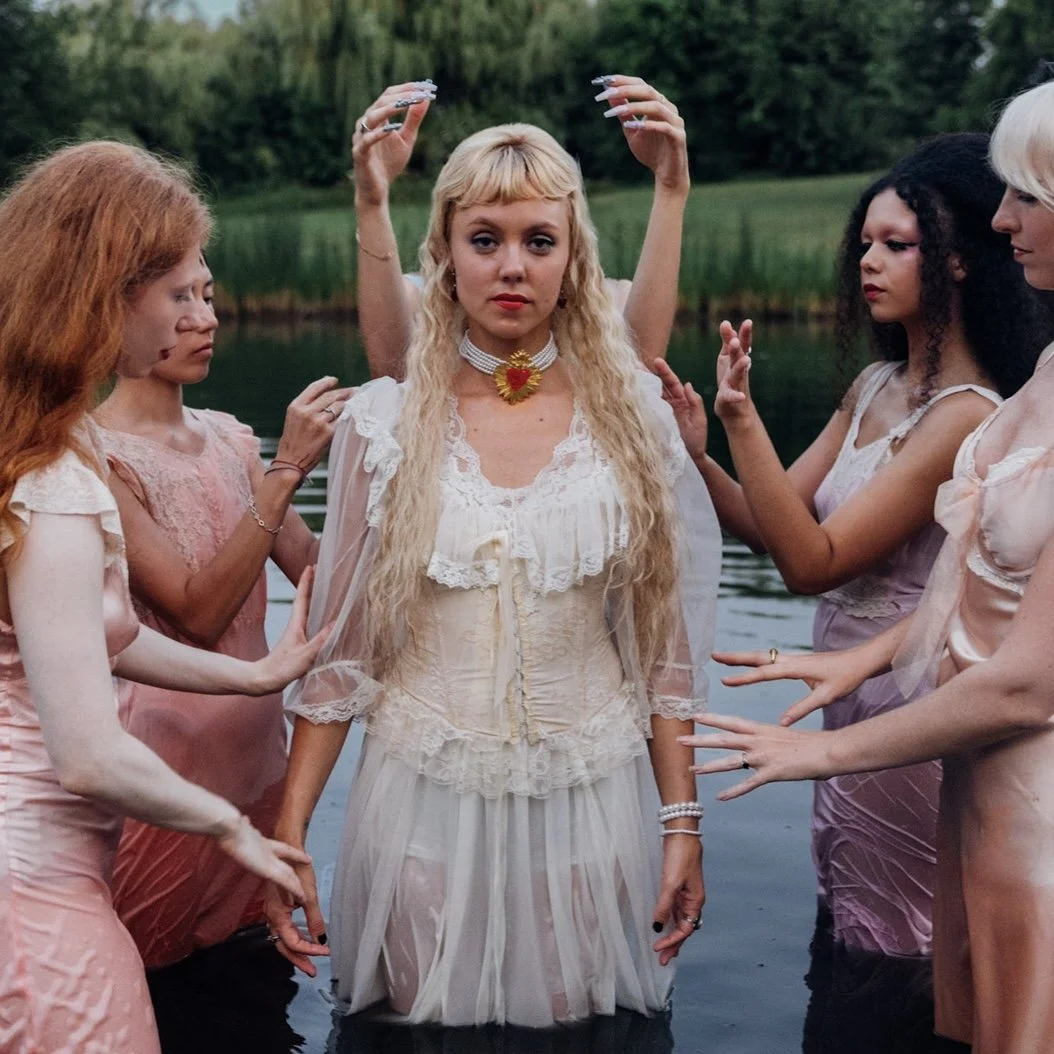
INTERVIEW: ILUKA on her second album 'The Wild, the Innocent and the Raging': “If I’m not making some people uncomfortable, I’m not fully doing my job”
Words: Emma Driver
Interview: Shalane Connors
Image: Rachel Steele
Published: 19 January 2026
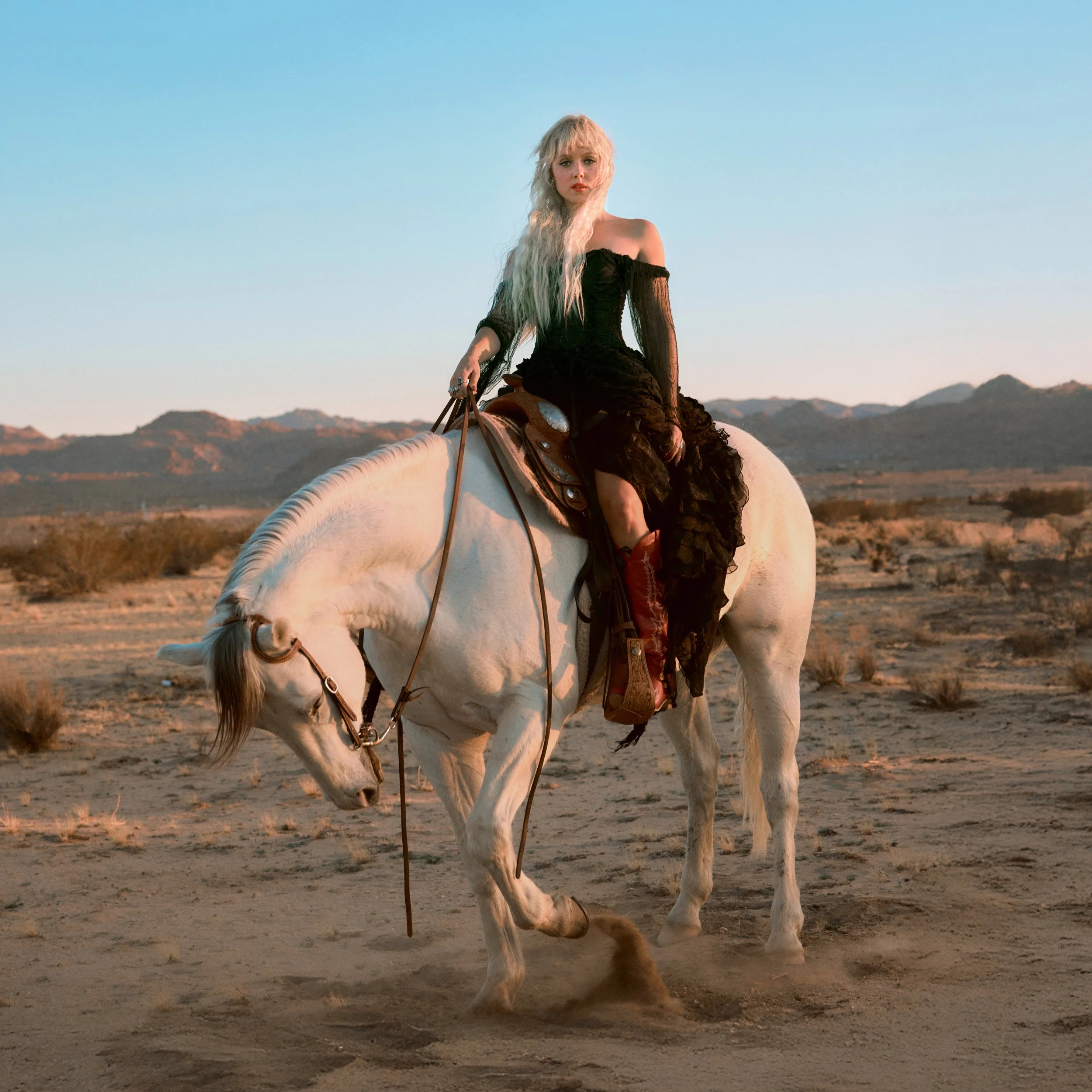
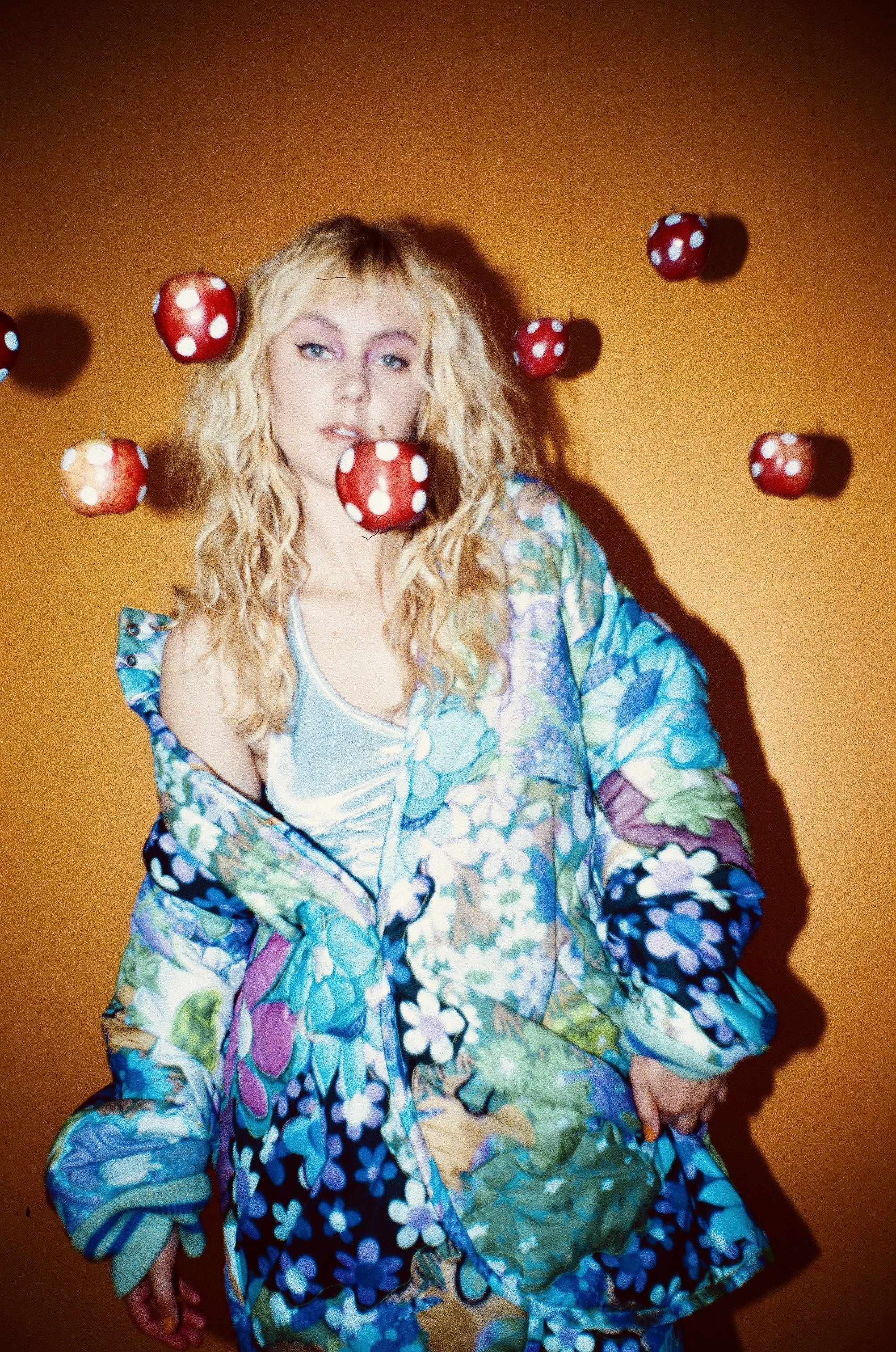
ILUKA – the Australian-born, LA-based singer and songwriter – is a bit like a musical fireworks factory. Fizzing with creative energy and a work ethic that would put most of us to shame, she’s also determined to rage against misogyny where she finds it, planting her feelings in her explosive brand of pop-country-rock. When she moved to LA from Australia three years ago, the creative engine of the city directly inspired her new album, The Wild, the Innocent & the Raging – from the city’s moody architecture to the sudden blast of freedom it represented. “For the first time, I had zero constraints,” ILUKA tells us in the interview below, and it shows in every track.
On the album, ILUKA’s sound reaches out into whatever genres will tell her stories best. Pop catchiness floats over a solid country-rock base – guitars are high up in the mix, there’s a real sense of storytelling, and “why the hell are we putting up with this?” is the dominant mood. Moments of vulnerability reveal themselves too, in a mix that mimics real human experiences – we might admit to losing a love, or to feeling stupid after a betrayal, but we can also feel a fierce determination to make things better, and to call out the hypocrites, all at the same time. So it’s fitting that The Wild, the Innocent & the Raging runs through all three of the things in its title.
First: it’s wild, as ILUKA channels powerful feelings into forms that can hold them. There’s ‘Cry Evil!’, a foot-stomping holler for female freedom, with a dash of Chappell Roan but an energy and a voice that is all ILUKA’s own. ‘Girl on the Run’ is a portrait of a woman who gets “the hell out of this town” to roam free, refusing to settle down. Then there’s ‘Woman Gone Mad’, which has ILUKA galloping out of the gate with an army of women at her heels: “Every law they pass feels like a fucking attack / Well god damn, I’m a woman gone mad,” she begins, then pulls apart the systems that threaten every woman, whether it’s lawmakers who strip women’s rights, celebrity gossips who destroy women’s reputations, powerful companies that body-shame us to make their millions, or the billionaires who burn the earth: “From their penthouse views, they can’t see what I can.”
Second: there is innocence, though it’s mostly innocence lost, as in ‘Haunted One’ (“If I work myself to the bone / Would you give me peace, let me back home?”) with its country/soul kick, the suspense building as a woman pleads for release. Or the girl who’s been pulled into the world of fickle ‘California Boys’ – a pop/rock gem with a chorus built for singalongs, where innocence would just be a hindrance. “All your excuses on repeat / You’ll never get the best of me,” ILUKA sings, with a knowing grin. Latest single ‘Wild West’ shows a more vulnerable side, where softer feelings can flourish. Acoustic guitar and quieter production bring the song’s honest lyric to the fore: “I found a boy who finally puts my heart at ease / … I hope this choice ain’t one I’ll regret.”
Third: there’s “raging”, and plenty of it – from ‘Wings’, with its chanting and its “rise up!” energy, to ‘Crucify Me’, a slow, ferocious burn of a song about refusing to be dragged down. ‘Thoughts & Prayers’ begins as a ballad of love lost, then builds to fury as ILUKA howls, “You’d better run, run, run for your life.” And she means it: “You lie like the devil / It ain’t accidental / That you found a girl who sinks down to your level.” The song would slot in without a hitch on an Amy Winehouse record, but no one would sing it quite like ILUKA does, climbing up through the chorus and hurling her voice to its limits.
When Women In Pop last caught up with ILUKA, for our podcast in April 2022, she’d just released her debut album Queen of Turbulent Hearts and had just left her home in Australia to take on LA. Now the gamble has paid off. She’s already working on her third album, and prepping to tour in Australia and the US (see: ilukamusic.com/tour for updates).
ILUKA spoke with Women In Pop’s Shalane Connors about how her US move sparked a creative fire, and made her even more determined to make people uncomfortable through her songs when she needs to.
Hi ILUKA, great to be chatting with you. We’re talking off the back of the release of your second album, The Wild, the Innocent and the Raging. It’s a fierce celebration of individuality, womanhood and defiance, and a wonderfully powerful album. You moved to LA about three years ago – what role did that play in making the album?
It was pretty much the birth of the album – landing in Los Angeles – and the album is very much a time stamp of those three years of my life. It reflects the “birth, death, rebirth” kind of vibes I had [when I] left Australia. I left everything – relationship, old team, home, everything that I knew. I left my past career. So everything about the creation of this album was very intense, which is probably why the record sounds like it does. It was about being in this moment when everything is being stripped away. At the time I had such bad anxiety – it was really hard for a while. And I’m such a believer in the universe pulling all of this stuff away so you can keep growing. But it was fucking hard, once the honeymoon period of being in the city wore off [laughs]. I was like, “I have to make this work, otherwise I go back to Australia.” I’d left this whole life behind.
But I think that’s what kind of birthed this. There’s defiance and grit, because I really felt like I had to dig down. Being in a pretty dark space and feeling so vulnerable was scary. I’ve always had that defiance and rage in my music, a little bit. But I think specifically, just hitting reset and looking back and realising a bunch of stuff – the way I’d been treated by certain people – I think that brought up a lot of amazing material, but stuff I had to work through. Moving into these really new spaces is where I finally cast the old shackles off, and I was really feeling a lot freer. I felt like I had this creative freedom in the US – “Oh my god, I can just do what I want.” ‘Cry Evil!’ and ‘Wings’ came from that. For the first time, I had zero constraints.
Yeah, LA is a place that kind of gives you that permission to be big and bold and take up space. Has LA itself influenced what you’ve done with your new album?
Oh my god yes, a hundred per cent. Pretty much the entire album was written in LA, and there are some West Coast–sounding songs, I’d say – the influence of that on ‘Girl on the Run’ and ‘California Boys’. But a lot of the sonic land is a lot more Gothic, [with a] darker cinematic element, but that’s what LA is to me. More so than the sunshine of California, there’s a lot of Gothic architecture, and a tragic, old glamour in everything. So it very much influenced the record, in terms of the darker landscapes and what I was going through personally, but also what I think the city has – it’s a very gritty city. That’s why a lot of the visuals around the music are also quite gritty. I find it very inspiring.
I followed your career for the last decade, here in Sydney, and one thing that always stood out – apart from your talent – is how incredibly hard you’ve always worked. How important is that to you, to be constantly hustling in the industry?
Yes, I think it’s very important. I think artists need to evolve and let the art happen, rather than forcing things, but I also think that it’s an industry where no one is going to come and do the work for you or make it happen – unless you’ve got extremely famous parents! I realised that early on, and yes, I’m a Virgo sign [laughs], so I’m a fucking workhorse when it comes to my work. And I really genuinely do love what I do. But I always had a very clear goal: I want this to be what supports me. I don’t want to ever have to rely on anyone financially.
When I moved to the US, on the visa that you’re on when you live there, you can’t make money outside of music. So I couldn’t just go get a bar job, or a cafe job. I just had to make it work. Now, finally, getting to a place where I can just do music – I never take that for granted.
It’s wonderful to see your hard work finally paying off. It seems like you really gelled with the LA industry. Can’t wait to see when people start calling you an “overnight success”!
Oh my god! If anyone bugged me, I’d be like, “Do you know? Do you know how many years … ?” [laughs]
I want to go back to your roots a bit. You’re a farm girl from the Blue Mountains …
“She’s a farm girl!” [laughs]
The Blue Mountains is quite a creative hub. And I know you have a very strong musical connection with your dad. He’s a luthier and musician in his own right, and I gather he has been quite the driving force and huge support for you. How important is it as a musician to have had that support? And where else have you found that within the industry?
Oh, I love that question. I was always a very sensitive kid – a “big feelings” kid, really sensitive about the world – and I’d get really sad when I was aware of the world. The first song I wrote and sang was as a seven-year-old. I was singing about this girl who wanted to break free – very corny, but very cute too! So Dad was always [saying], “Write songs, write songs,” and I would write them, and he had a twelve-track recording desk, and he’d record them with me. So yeah, I feel very lucky. Music and songwriting has just been how I process the world, and I’ve never known that to not be the case. I’m so close with my dad – he’s still often the first person that’ll hear my new songs.
But I don’t think I found that level of support in the industry. There’s been amazing mentors along the way, though I have also struggled with finding mentors. From a very young age, I’ve just trusted my intuition, even when so many people have told me “no” in every shape and form. You know, “You can’t go to the US. You haven’t reached a certain level to be able to do that. You can’t do that.”
Lots of naysayers? Tall poppy syndrome?
Lots of naysayers in Australia. Tall poppy [syndrome] is real. I mean, I was laughed at, and I will not say any names here, but I was on tour with a band, and their team were all sitting in a room – not the band, the band’s team. They said, “What are your next moves?” And I said, “I’m moving to the US.” And they all laughed. They actually laughed – not like, “You’re such a dummy,” but [in a patronising tone], “Look at little you! Go for it, honey. But that’s ridiculous.”
Did that light a fire under you, though?
Oh yeah, fucking oath! There’s a reason why I write the songs that I write. I’ve always had that personality – when people say that shit to me, I get so caught up on it, and I’m like, “I’m gonna fucking show him!” [laughs]
So, thanks to all those people …
Yeah, totally, totally.
As a woman whose music is very much centred around feminine defiance and power and taking down the patriarchy, have you come up against any resistance?
Oh, are you kidding? Of course! [laughs] Online, on social media, absolutely. I won’t drop any names, but ‘Cry Evil!’ was played on a particular radio station in Australia, and a lot of men called in: “What is this? What is this crap?” I know the radio presenter, she was telling me at the time, and she was like, “Wow.” So, not to my face, but when it’s played on radio, and online – oh my god. You can go through some pretty funny comment threads on my videos. [laughs]
How do you deal with that? Do you laugh it off?
It was funny at first, and then it get it does get a bit exhausting. And I noticed I kind of put this protective shield up. I kept checking in with myself – “Is it worth it? Getting all this hate?” The artists that I admire the most, they’re always pushing and saying the things that make people uncomfortable. So I do think that’s what I’m here to do. If I’m not making some people uncomfortable, I’m not fully doing my job. I’ve made my peace with that. And the people who connect with those songs, I’m writing it for them.
You’ve been at this a while now. Do you feel there’s been any shifts in how female artists are scrutinised and received, in your time in the industry?
It’s changed so much. Particularly in the pop world right now, there’s just so many girlies killing it. And I love it. But then you see shit online, or you see female artists being dragged, and you’re like, “Really? Are we still here? Are we still talking about this person’s weight? Are we still talking about their bodies?” Starting out, when I was gigging in the indie music scene in Australia, I’ve always loved putting on a good fit, being extravagant. And quite a few times I had dudes absolutely tear my outfit to shreds, and for that to be the main review of the show, like, “What the fuck was she wearing?” I looked fabulous – fuck you! Just because I wasn’t wearing jeans and a T-shirt, which Australians love the indie girls to be wearing, rather than anything theatrical or extravagant.
So I would love to say that it has changed a lot, but there are a lot of moments where I’m like, “Are we still here?”
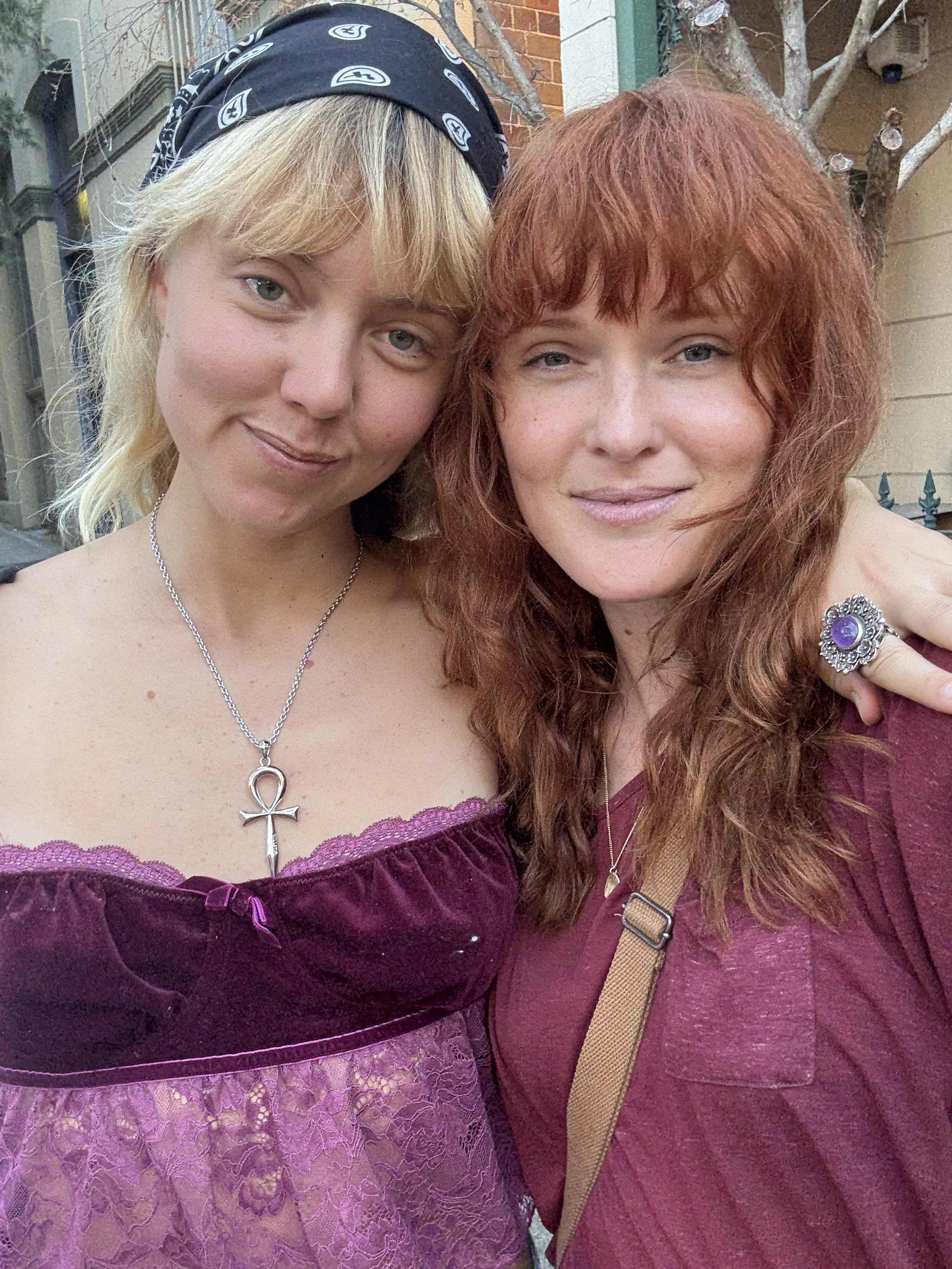
ILUKA with Women In Pop’s Shalane Connors
You have a unique, powerful vocal quality – what are your earliest influences, or women that you saw paving the way? Do you feel like you modelled yourself on anyone, in vocal or musical style, or this was just a sound that came naturally to you?
As we all do, I grew up on what my parents played. Kate Bush has always been a huge influence, in her exploration of her voice. I started out more in the folky places, so there were a lot of the songwriters – Fleetwood Mac and Stevie Nicks definitely, and also Janis Joplin – the way she used her voice was a tool for her feelings. Jeff Buckley as well – the way he used to sing live, using his voice as this kind of tool for emotion. And Bowie, and Prince – I particularly like the sensuality in [Prince’s] voice. Definitely a lot of the folky artists – Joni Mitchell and whoever else my parents were playing, a lot of the ’70s, ’80s songwriters. A lot of Creedence Clearwater Revival – the way [John Fogerty] uses his voice, it’s also very gravelly. Later I loved Nina Simone. I remember hearing ‘Sinner Man’, off her record Pastel Blues.
I was always attracted to a voice that was a little bit different and was able to convey a feeling, and sometimes be a little bit full-on. Even artists like Alanis Morissette – I love a voice that conveys angst. Because I always had such deep, intense feelings, I think that’s what I was yearning for. I play other instruments, but I’ve always been drawn to my voice being the tool. I’ve never been trained technically, and I was never attracted to that.
So, what’s coming up for you? We’ve got you in Australia next month, and then back to the states for your US tour?
Yes. There may also be some other dates, but I cannot confirm that right now …
Are you looking forward to being on the road again?
I am, yeah. So much of these three years in the making of this album was [in the] studio, which I love. But you know, you get messages from people, and people are commenting, and I’ve connected with fans online, and until you meet them in person and have a human-to-human experience, a lot of it doesn’t feel fully real. I can’t really fully celebrate the wins when it’s all virtual. So I think I’m excited to be seeing these people, and seeing the people who have been influenced by the music. I think that’s going to be a big thing.
Amazing. It’s been a privilege talking to you, ILUKA. Good luck with the tour.
Thanks, girl!
ILUKA’s album The Wild, the Innocent & the Raging is out now via Nettwerk. You can download and stream here.
For 2026 tour dates, go to ilukamusic.com/tour
Follow ILUKA on her website, Instagram, Facebook, YouTube and TikTok