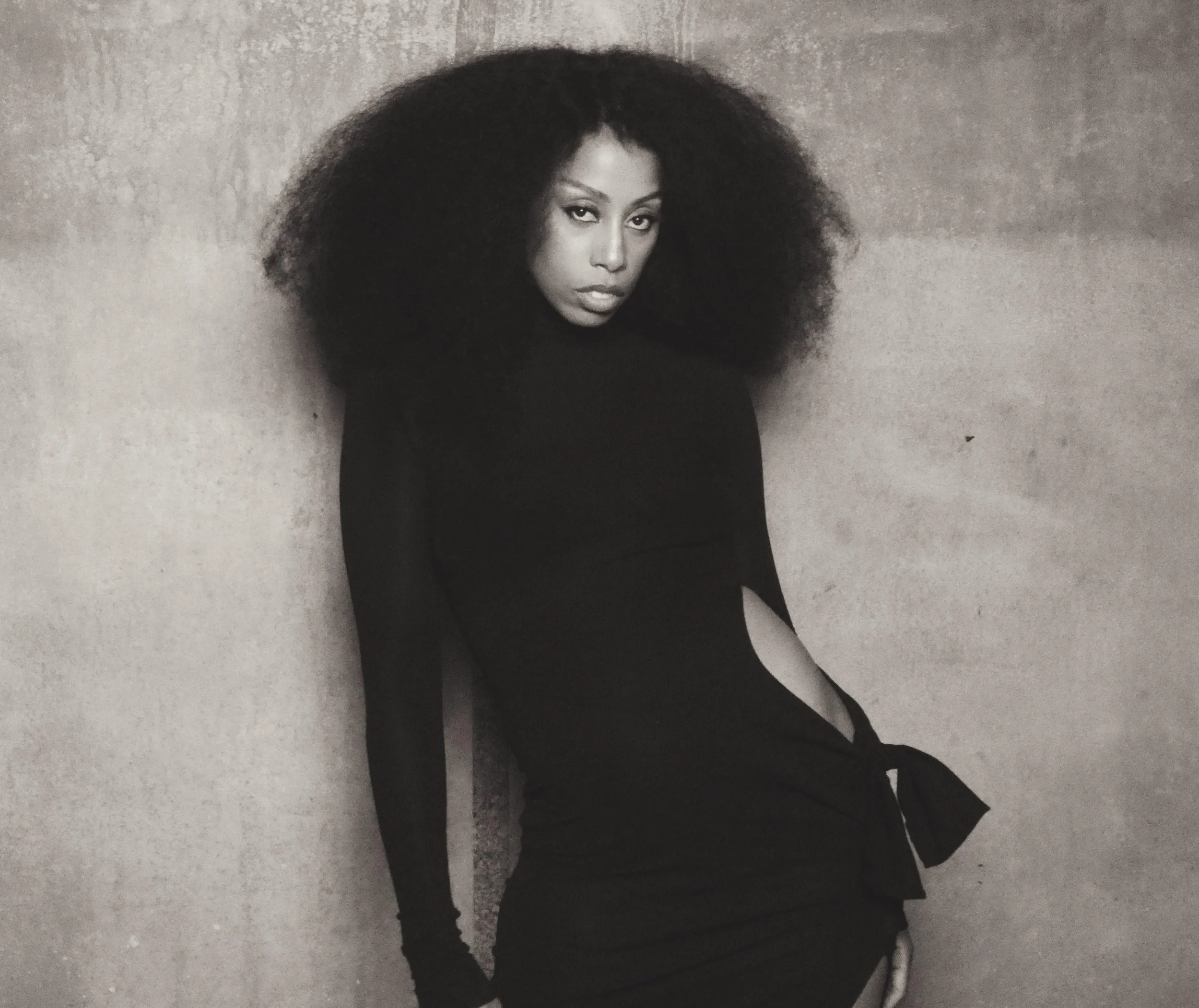
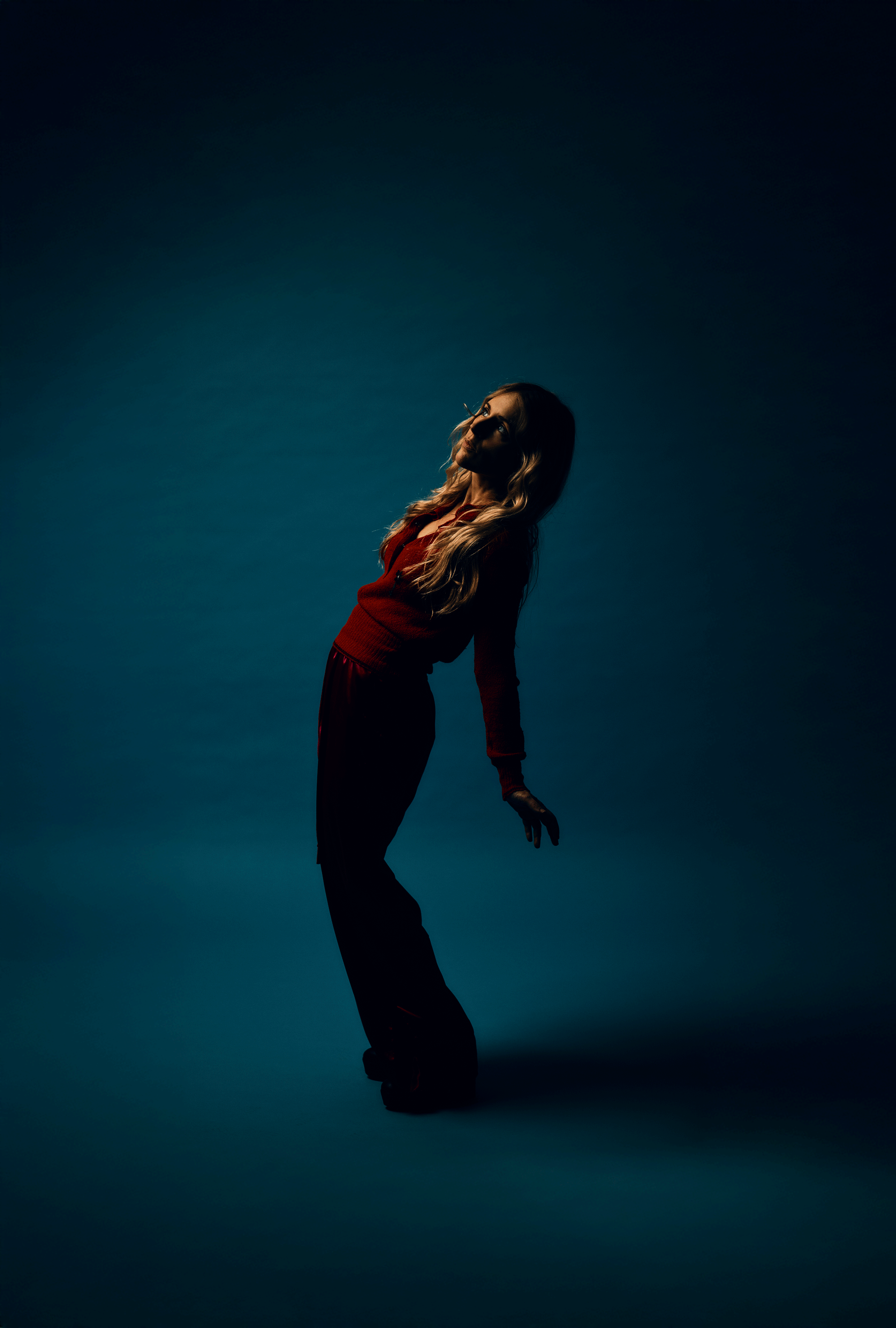
INTERVIEW: Agnes Obel on her upcoming Australian and New Zealand tour: "These are the ideas that capture my imagination and that's what I end up making"
Interview: Jett Tattersall
Image: Alex Bruel Flagstad
Published: 4 August 2026
Danish born, Berlin based Agnes Obel sits at the fascinating intersection where classical, pop, jazz and electronica meet.
Releasing her debut album, Philharmonics, which she wrote, performed and produced by herself, in 2010 she found immediate acclaim, with the album peaking at number one in her home country, and going platinum in multiple countries across Europe. With a core of piano running through most of the tracks, the album featured purely instrumental tracks like ‘Louretta’, alongside the folk pop of ‘Katie Cruel’ and alt-ballads like ‘Over The Hill’.
Her second album, Citizen of Glass was released in 2016 and subtly introduced electronica to her classical-alt-pop blend. Never overwhelming her music, there are hints of it on album opener ‘Stretch Your Eyes’ and is present perhaps more as a vibe on tracks like ‘It’s Happening Again’.
In 2020, Obel released Myopia, which again featured stunning classical-theatrical-pop crossovers, like the brooding ‘Island of Doom’, or the epic title track where an unexpected drum beat lends the track a more familiar pop-rock soundscape. ‘Won’t You Call Me’, the album closer, is a compelling, soaring, otherworldly beauty that will have you hypnotised until the very last note.
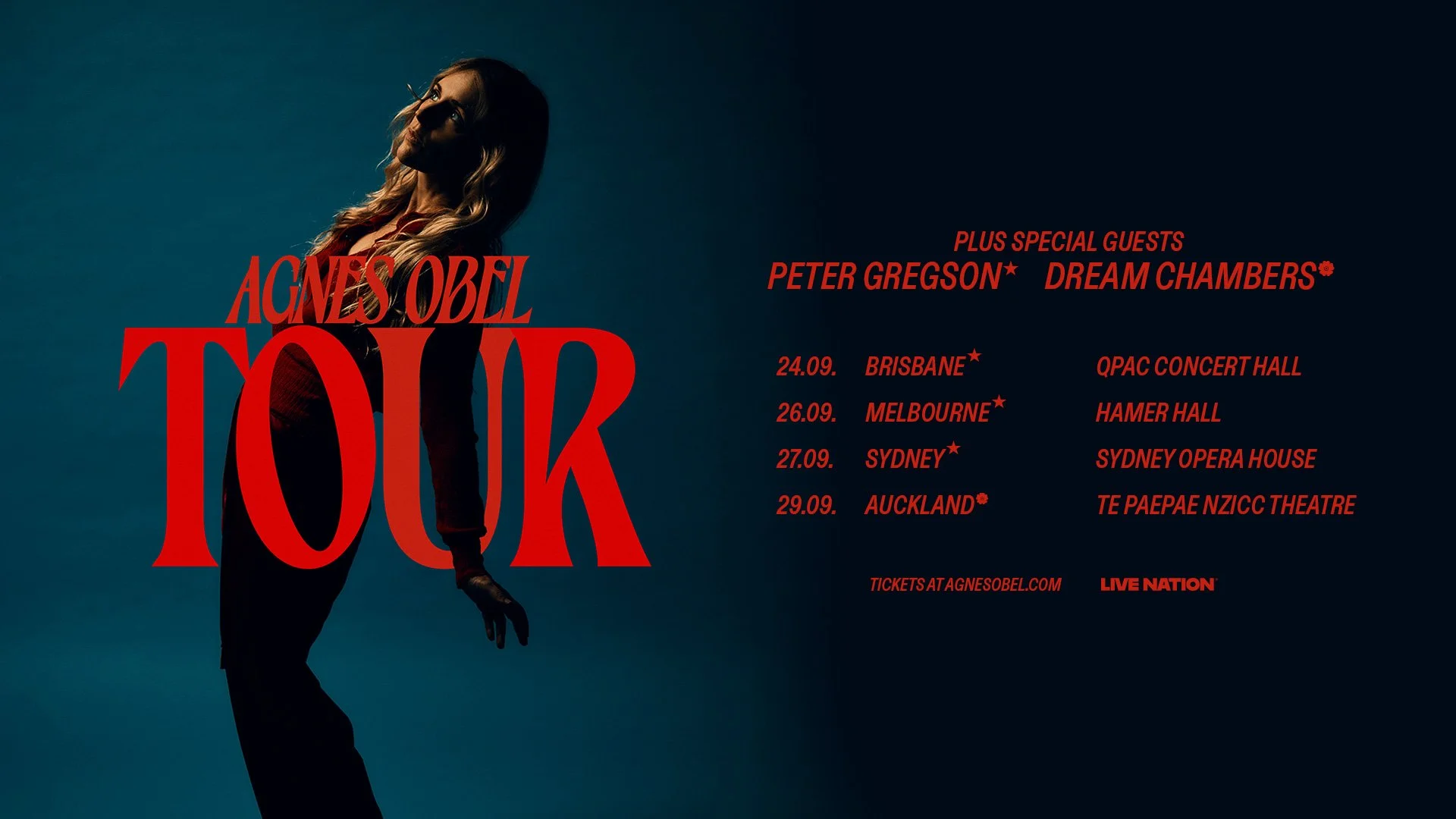
Next month, Obel will return to Australia and New Zealand for her first shows since her sold out tour in 2022. It follows her return to the stage in 2025 for her first tour in five years, selling out shows across Europe. She performed songs from all her albums as well as offering glimpses of brand new music.
Kicking off the tour in Brisbane on 24 September, Obel will then perform in Melbourne and Sydney before finishing in Auckland on 29 September. Tickets are on sale now here.
One of music’s most fascinating and compelling artists, Obel’s live shows are an experience not be missed. Jett Tattersall for Women In Pop recently met with Obel to find out more about her music and her upcoming shows in Australia and New Zealand.
Hi, Agnes. I just want to say personally thank you for the music, an endless stream of inspiration you have given my life. It's such a pleasure to talk to you today.
Oh my god that’s so sweet, thank you
It feels like your music exists in another place and time, another place of memory. It doesn't belong to the waking world, but at the same time, it feels very natural and endless. Is that something that you aim for, or is it just how you've always heard music?
I don't know, to be honest. I just get an idea, it appears and it's not something I feel I control. If I like it, I will follow it down the rabbit hole. That's basically what's happening. Sometimes my ego has an idea, I want to make this kind of album and want to do that and that, but then the actual ideas come from somewhere else, far away from the ego. So that's why, I can't really say why it sounds like it does.
Many times I have been annoyed at what I'm doing, I feel like I want to do something more cool. People always say ‘it's so emotional what you're doing’, and it's like I don't control it. These are the ideas that capture my imagination and that's what I end up making. If an idea comes, and it speaks to me, I will follow it and try to finish it. That's how it works.
I'm going to pull on that a little bit more because apart from your voice, which quite often sounds like it's coming from various corners of the rooms, it’s very beautiful, the sounds that you use in your music is is both familiar instrumentals, but also these strange shapes moving. You have this very broad experimental thing with texture. I'm very curious, what draws you to these sounds and music, because you push beyond just a piano.
I have been interested in rhythms, but I just didn't want them to be drums. Still now, I have this new album, where there's much more drums on, but I really try to avoid conventional drums, and that meant that I have made a lot of rhythms on my piano, or on the strings. There’s some songs where I made the whole rhythm with a pen on my desktop, or on the floor with my shoe. I have made so many beats that I call shoe beats, a shoe hitting the floor, and then I build a beat to support the piano or other instruments.
I don't know why I like it like that, but as soon as you add drums, the genre of the music becomes more defined. Trip hop, hip hop, rock, even electronic music, is all defined by the drums. So you're much more free if you completely step away from this whole cultural history of drums and you make your own rhythmical sounds. That's why I've gone down that road.
You're taking these these new songs to the stage now after taking quite a break. How do you bring those very intimate, experimental percussive sounds to a very enormous stage?
I have to say my music has never been easy to translate into a live show. Also because I like use sounds that are not very loud and very organic, cello and other classical instruments and piano. They're very dynamic instruments, and it can be tricky to amplify in a live scenario, especially festivals.
Also I think the audience has gotten more and more used to a very polished, perfect end product coming from live performers to the degree where live music isn't really live music anymore. That’s my impression. Everything is pre-recorded or automated, so it is not easy when on one side you everything to be live and made in the moment, and then you have these instruments and these sounds that are super dynamic and actually not very loud, including my voice. How do you do that? It's been a learning journey, and I'm still learning and trying to figure out how to do it. I've come to the realisation it's okay, it's not perfect, and maybe the imperfection is what makes it interesting. That's where I am now.
I'm glad you mentioned your voice, because you're the writer, producer, and performer of all your work and I feel like you've pushed its range by playing with where it comes from in the sound. The harmonies feel like they're coming from all over the room, and you will also chase a note flying across the register. When you're arranging vocals, is this something you're trying to reproduce? Or is it something you discover as you build the song?
I think it's a little bit of both. You can have this idea about something you want to do, and then you try it, and then it becomes something else. But maybe it works too. Very often I do a demo vocal, when the idea is really new, and then that's what I'm going after the rest of the process with that song - this purity of when the idea is made, the conception of the idea. Some people call it demo-itis, where you're in love with your demo, and I definitely suffer from this big time. I always have it when I play piano. The first time I play the idea, I feel like it's so pure, there's nothing of my ego or all these outside ideas are not there. It's just a pure idea. So I always try to get to that somehow. Sometimes it drives me crazy because in the demo I sing some kind of gibberish thing, and then I can't use that, and I have to recreate it, I do all kinds of things to try to recreate the mood of this first idea.
Do you think that demo-itis is also connected to the way you feel about live music now? You mentioned before about it being so perfect and pre-recorded that it loses its immediacy or its true heart because it's been scrutinised to perfection.
Yes, of course. When I go to a concert, I'm not going to hear perfection. If it's music I love or an artist or a band I love, I want to hear them, who they are musically. How can I hear that when it's like completely perfect, or in some cases pre-recorded, not even happening in this moment when I'm there? I don't care if they make a mistake or something doesn't sound perfect. It doesn't matter, I want to meet them musically. If I have these expectations as a music listener, I should also live up to them myself [as an artist].
I understand it's hard, because we’ve all gotten so used to this perfect thing. Backing tracks and clicks and autotune and all these things. People got used to it, and so it's so new for the ear to hear this imperfect stuff. As a person who's performing live, I am also sometimes like ‘oh my god how can I perform with something that sounds so chaotic or so dynamic or full of so many mistakes’.
The band have hired are all incredible musicians, so that of course helps. The drummer I found is from Switzerland, and he's sort of famous for playing on the Alps. He lives in the Alps, and he plays [drums] on the stones. He plays on everything. So I found somebody who really is an expert in playing, also playing very softly. He can play on anything and it sounds great. So in a way, I've made it a little bit easier for myself that I found these amazing musicians.
Lastly, everyone is over the moon to have you coming to Australia. But I'm very curious, given all this this sort of organic orchestral chasing that you do, if you were not a musician, what would you spend your days obsessing over if it wasn't sound and music?
I actually think I would like to study neuroscience. I really love everything to do with the brain, and I think it's super fascinating. I also love the whole thing about performance in the brain, the flow. When I make music, and maybe this why I chase this demo or the first idea, because I am in that flow moment state. The analytical part of my brain is not there. It is a certain state that is ideal for performing, for playing live, ideal for sports. A lot of things happen when you are in this state and I'm very interested in that. I would love to study this, to be honest.
Follow Agnes Obel on Instagram, Facebook and YouTube
AGNES OBEL AUSTRALIA & NEW ZEALAND TOUR
24 September - QPAC Concert Hall, Brisbane
26 September - Hamer Hall, Melbourne
27 September - Sydney Opera House, Sydney
29 September - Te Paepae Theatre NZICC Theatre, Auckland