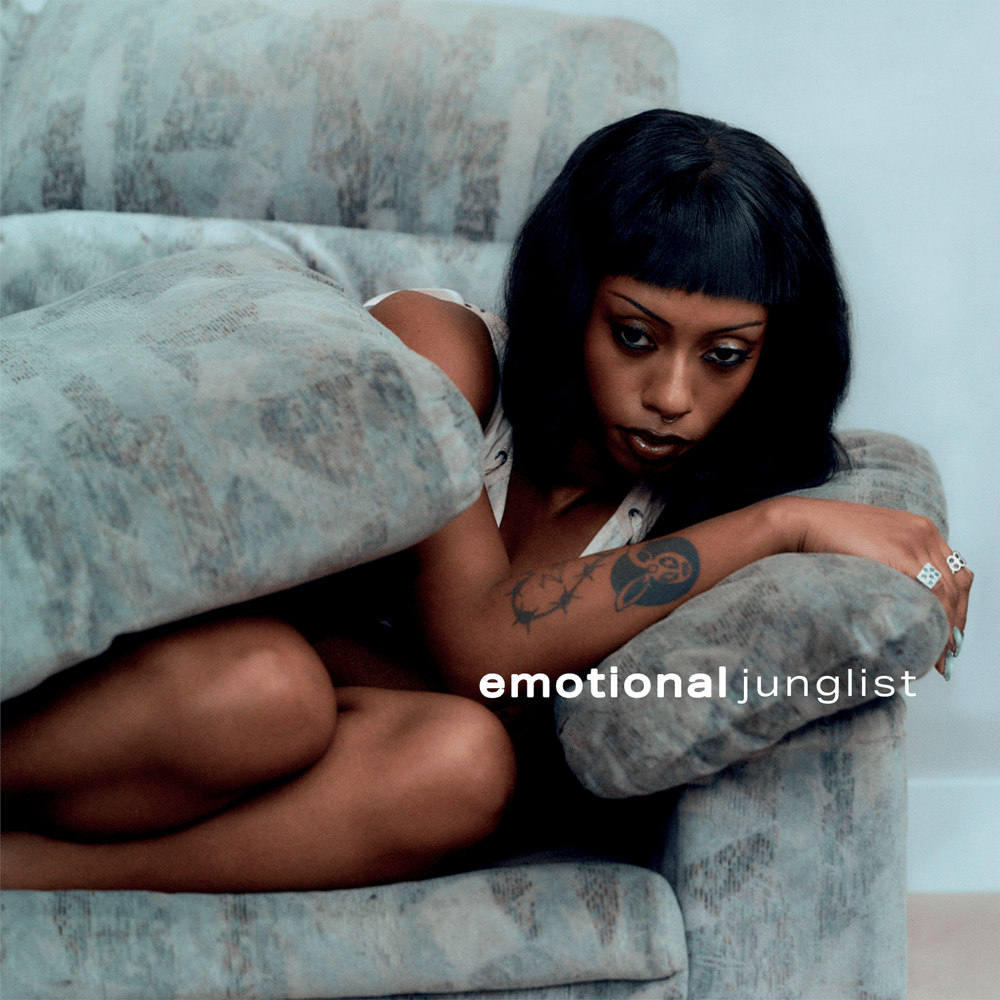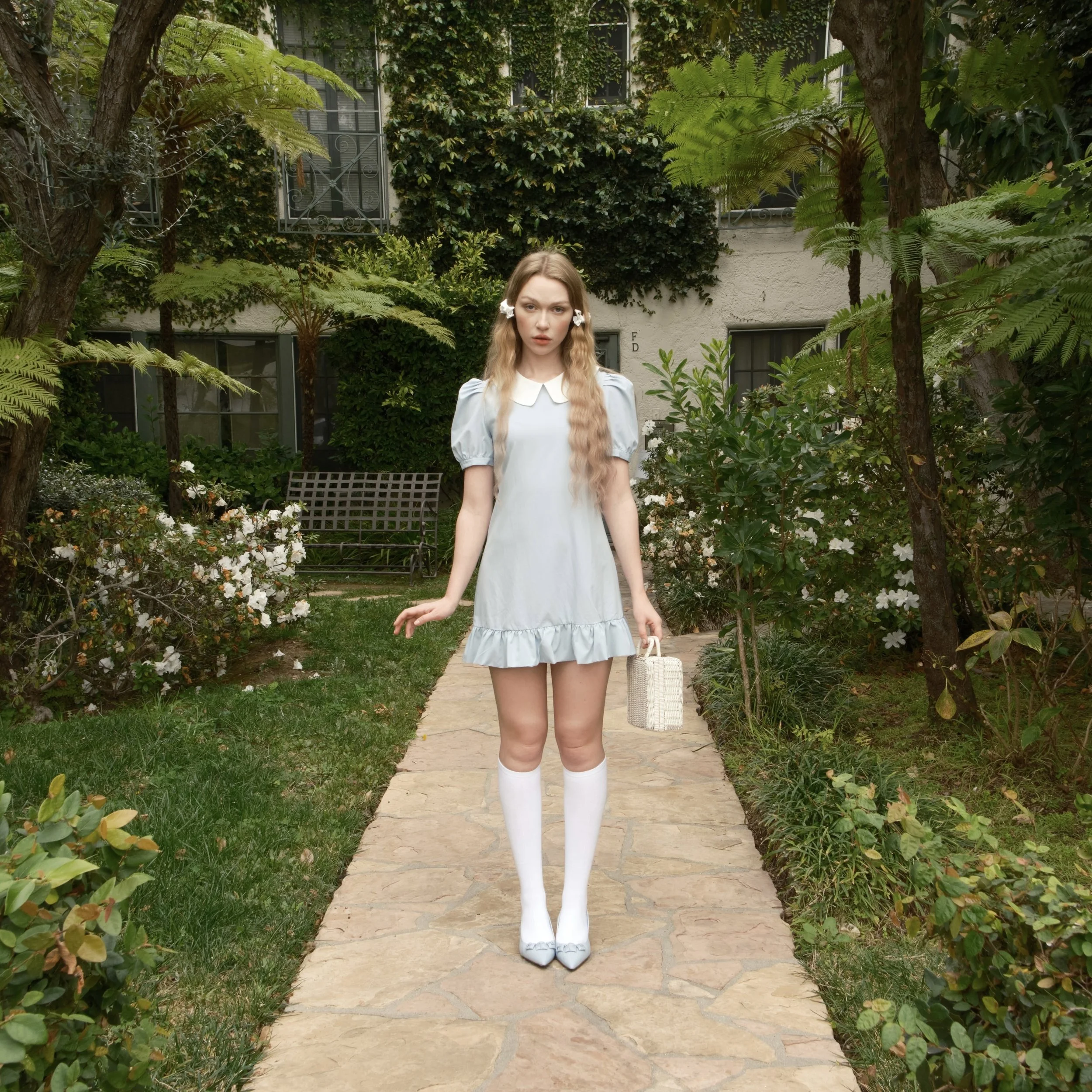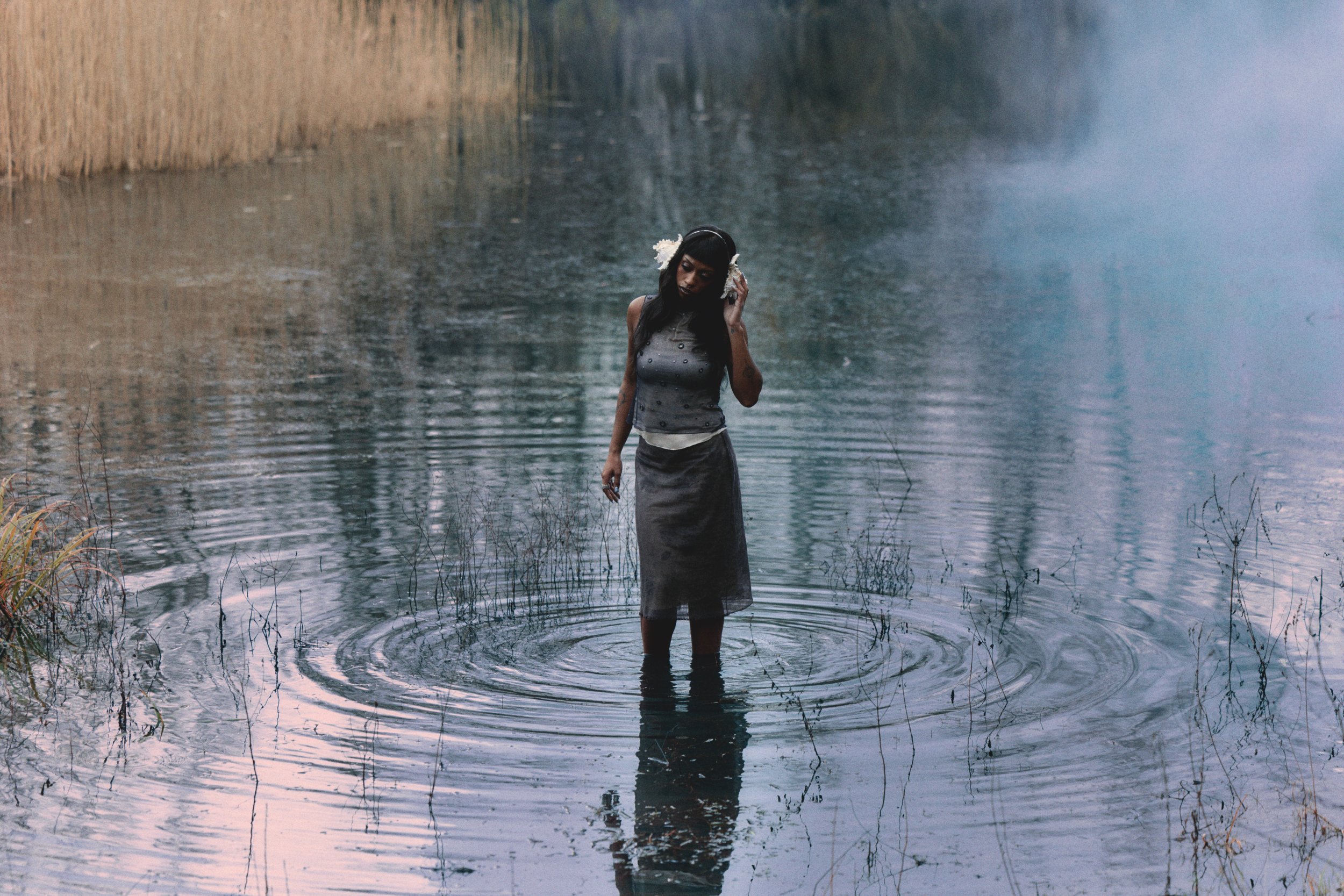
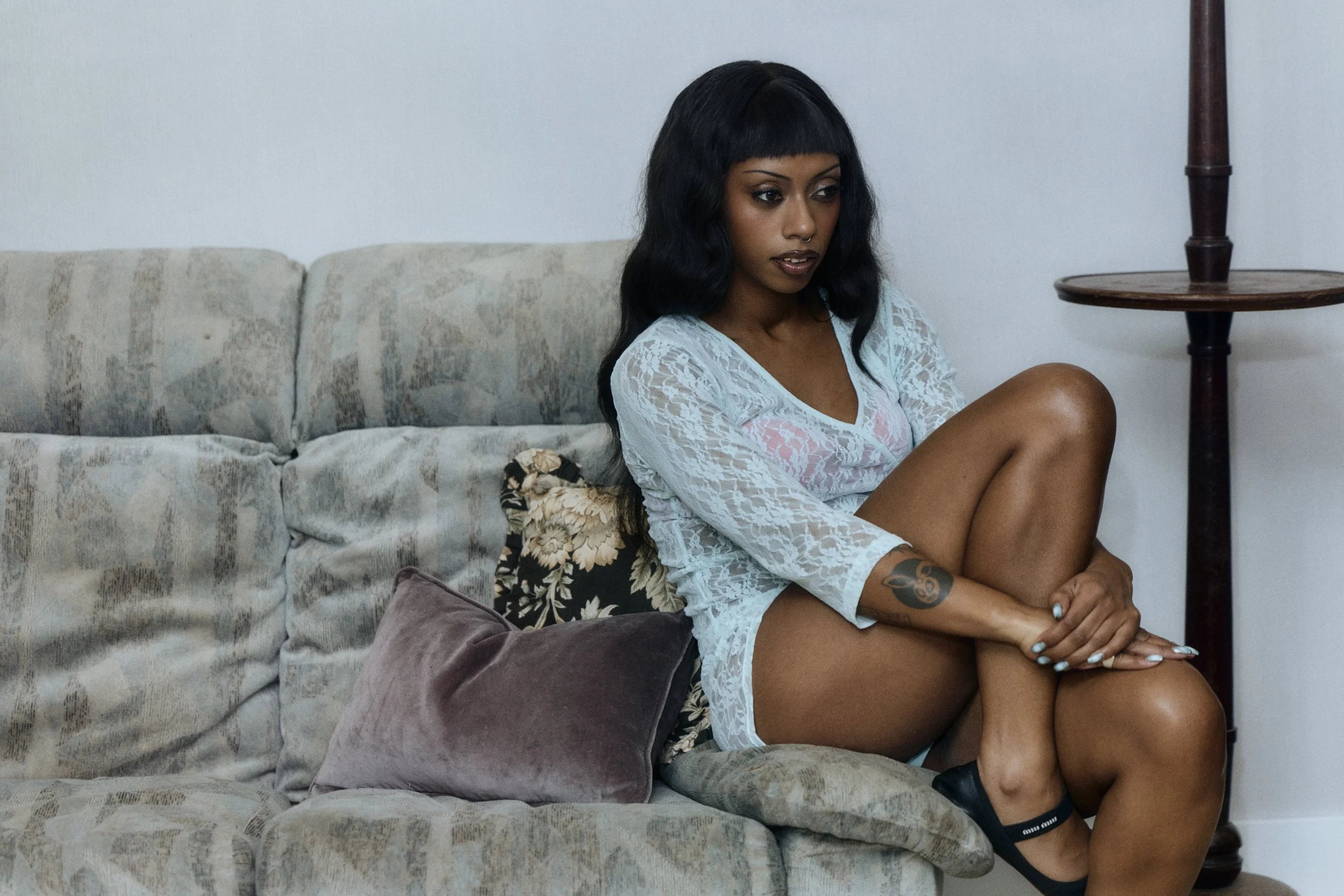
INTERVIEW: Nia Archives on her second album 'Emotional Junglist': "I'm really proud of this piece of work, and hopefully people can be open-minded to hear me a bit more exposed."
Interview: Jett Tattersall
Image: Iris Luz
Published: 23 July 2026
Nia Archives (real name Dehaney Nia Lishahn Hunt) has been releasing music since 2020, and in that short space of time has been lauded as the figurehead of the new generation of jungle/drum and bass artists.
She has already had a number 1 EP and album on the UK dance charts, won the NME Award for Best Producer, been nominated for a Brit Award and the coveted Mercury Prize, and been handpicked by Beyoncé to perform as support at one of her London concerts in 2023.
She has recently released her second album Emotional Junglist which takes her jungle/drum and bass soundscape to a new level, refines it and brings more pop and electronica sensibilities into the mix, with Madonna and Saint Etienne becoming major inspirations for the album.
The album explores growing into your womanhood as you reach your mid-20s and the emotional changes, and maturity, that brings as your childhood becomes further and further in the past. Archives sings of love, relationships, sexuality, obsession and the sometimes chaotic in-betweens of all these emotions.
“To be an Emotional Junglist is to feel everything and nothing all at once,” Archives says. “It’s to be calm yet chaotic, sane yet manic – up, down and sideways. The emotional spectrum I experience is vast, and I think this album reflects that depth completely. Being in your mid-20s, you’re figuring out who you are, exploring your sexuality… I think people kind of get stuck in girlhood, but really and truly, I’m 26 and I feel like I’m entering womanhood.”
The album opens with ‘Feelingz Go Numb’, arguably the track on the album that represents the pure jungle sound of Archives’ previous releases. A thudding beat, distorted vocals and a moody, nightclub vibe that instantly transports you to the middle of a late night dancefloor.
First single from the album ‘Danger’ is still an absolute highlight. While it also has a frenetic drum and bass foundation, it is just one element of a track that has a lot in common with the best dance songs you’ve ever heard. Gentler sections, sing-song melodies and pop influences collide, and the track gives the “emotional openness” box a massive tick. Along with it marking the first time Archives has ever sworn in a song, it is an explicit story of pure sex: “Make me scream, I don’t care who hear me … / Nobody ever did it like you, baby,” she sings.
‘Vertical’ highlights the sonic experimentation Archives has jumped into with this album, which takes you on a journey into 1990s electronica inspired by Madonna’s Ray of Light album and Björk. The lyrics depict that period in the first flush of a relationship when infatuation can veer into blind obsession: “You make the rain / I chase your hurricanes.”
‘This Could Be…’ is a gorgeous love song that leans into 1980s indie pop with dashes of electropop with Archives singing of finding love after a number of heartbreaks - ‘Maybe you'rе the one / This could be the start of something good’. It is followed by ‘Dance With Me 2nite’ which continues the story of finding the right kind of love again: ‘Tell me this all feels so right / And you're ready to love again / In the way I am.’
Jorja Smith features on ‘Get Me Down’ which brings back the drum and bass sound mixed with almost ethereal, floaty vocals and lyrics celebrating sensuality, while latest single ‘There Goes Ma Head’ is an intriguing mix of gentle pop and harder drum and bass. In many ways it is perhaps the best representation of the album title - it has a tender, emotional heart in the middle of thumping jungle beats.
‘The Darkest Hour’ brings back the late-1990s electronica trip-hop feel, drenched in melancholy, with Archives singing of the heartache of a relationship ending when she thought it was something more serious. ‘Watch you say goodbye / Thought you were more than a moment in time,’ she sings.
The album ends with ‘Boys in Blue’, which is arguably the most pop-centred song on the album. With a sound that is reminiscent of pop-punk and New Wave of the early 1980s, it has a structure more like that of a standard pop song with very little of jungle making its way in. Archives sings of a relationship that has deteriorated so badly an ex-partner calls the police as revenge – “Brought coppers to my gaff / Did you think that you’d have the last laugh?” Archives makes her feelings clear in a cutting putdown: “I know that you still hope I do / But I don’t feel a thing for you.”
Emotional Junglist sees Archives straddle the line between change and constancy with expertise, and it takes her artistry in such a thrilling new direction that it is hard to not jump on board with glee. Undoubtedly a highlight of Archives’ career, it is also a strong contender for one of 2026’s greatest albums. We recently sat down with her to chat more about the album’s creation. Read the full interview in Women In Pop issue 18 - pre-order now
Hi Nia, it’s so lovely to grab a window of your time. Congratulations, congratulations on Emotional Junglist, it's so beautiful.
Thank you, I really appreciate that. Thank you.
Obviously, this is the follow up to your killer debut album Silence Is Loud. Second albums always come with expectations of the artist, which probably isn't helpful, but you seem to be someone that really just does your own thing and and does their best not to give a shit about what everyone else is leaning into or expecting of you. That said, what was your headspace like going into this?
Honestly, when I started making the project, I was not thinking about it in the way that I'm feeling now. I was making the album last year, and I was just so excited to express myself and try new sounds, switch it up. I made this album that I'm really proud of, and I thought, it's weird, it's a bit different, and I'm really excited about it. But now it's at the point where I'm releasing it, I'm starting to get the fear of the second album. Have I gone too different? Are people gonna like it? It's interesting that's how my headspace has changed from being really excited to preempting what's going to come next.
Dance music in general is usually lyrically quite brutal. No one can see you cry when you're sweating on the dance floor. However, with this album, particularly, I feel like it's so journalistic, lyrically, and there's real intimacy. Does that maybe contribute to the trepidation you felt upon the release? Like, this is really exposed.
Maybe. Some of those tunes are a bit more stripped back, and for years I've kind of hidden behind these jungle beats, and said my emotional message, but everyone's dancing, nobody really notices what I'm saying. So I'm a bit nervous about some of these softer moments on the album, where I haven't really got much to hide behind. I'm really proud of this piece of work, and hopefully people can be open-minded to hear me a bit more exposed.
Do you think that emotionally exposed electronic music is treated differently within dance culture. Is there some kind of line that gets crossed, or do you think it's welcome and always has been?
I think in dance culture, there's different types of people. There's people that want to go to raves, and then people that really love music. They both should exist, and both make the ecosystem go round. But I think they're definitely very different purposes. If you just like going partying on the weekend, which I love doing as well, that's a separate thing. Whereas if you love dance music, that's not always listening to it in that kind of overstimulating environment. Sometimes it's listening to it on your own, or on the bus, or whatever. It's not always for that kind of social environment.
There's so much emotional dance music, but I think in a rave setting it doesn't always make sense, unless it's that one tune that everyone can have this emotional moment. So I think emotional dance music definitely has a space, but it's more introspective, it's more solo. It's more for yourself rather than in a group.
‘Danger’, that track is stunning, but I was particularly drawn to the video because I was like, this is exactly what your music is, it's so intimate, and it's this beautiful one woman show of sensuality and confidence. You spoke about that track moving from girlhood to womanhood, how has that shifted you as an artist, but also with this album and your music going forward?
I can definitely hear the difference. I feel like womanhood is so complex, and there's so many things that you're constantly learning about yourself. I know that I will probably look back at this record in like 10 years and be like, Oh my god, I didn't even have a clue’, but I'm just processing all these things, all these changes that are going on in life. I don't think I could do that on my last album, I feel like it's definitely a late 20s kind of scenario, to really start to understand who you are and what you want, what you don't want. This album really explores that, and it's nice to have the space to explore it.
Has the reaction to this new music been quite incredible from other women?
Yeah, especially this era. It feels like I'm very in this female gaze kind of era, I'm really making music for the girls. I just feel like all the girls I see at my shows, I just feel so much kind of relatability to other women, and I love feeling that we all go through the same stuff. I like that in my music other women can find parts of themselves within it.
Being a woman, you have to be tough and that's why I've done all this shell imagery, because you do have to have this tough exterior, but as a woman I do feel like I've got quite a soft inside. That sounds so cheesy, but shells create pearls and that's why I chose that for the imagery of the album
Shaking off that swagger, because we think being tough is only thing to survive in the industry. But being soft and doing something for the girls is equally as strong, if not stronger, because you're being true to yourself.
Yeah, it's actually, weirdly, one of the hardest things I've done. It sounds so stupid, but it's probably the toughest part of my career. It's probably just because I'm really just put myself out there. I'm happy that I've done it, but it's not easy. It's quite a journey, one that I hope to get to the other side of.
Speaking of incredible women, let's talk about your collab on this with Jorja Smith, ‘Get Me Down’, It's so good. You've collabed before with your remix of ‘Little Things’, but talk to me about how this one came together.
Me and Jorja met each other when I did the ‘Little Things’ remix, and we just kind of hit it off. I kind of see her as a cousin. She's one of the most loveliest people I've met in music, she's so bubbly, such an amazing personality. We did a couple of writing days last year in the summer, we met up in the countryside and we made a couple tunes, and this was the first tune we made. I wanted to make something kind of Massive, Attack-y, a bit trip hoppy, very grand. It was really fun, it felt like not work, it felt like play, writing this song together. Ed Thomas, who I'd worked on ‘So Tell Me’ with a couple years ago, played all the strings and stuff, and it was just such a fun day. Jorja loves that tune, she's so excited about it, and I'm really excited to do festivals and play some stuff with her, I'm playing her All Points East in August. It's great to collab with someone that's started off as a friendship that's been so organic, to like now make a tune together. It's really exciting.
When did you go from hearing, loving and absorbing jungle music to going, ‘I'm going to start making my own’?
For me it was more of a happy accident. It was something that I fell into. I was making a lot of hip hop, boom bap beats when I was 17, and I was sick of making depressing songs. I wanted to dance to my music, so I just double timed the beats, and then I had jungle music. Funnily enough, that’s what they did in the 90s, they just sped up hip hop breaks, and they had jungle.
You've always spoken very highly of and pushed forth your northern roots, and what that did for your music. Can you hear the sounds of your geographical upbringing in your music?
In my earlier stuff, definitely. I've made a few EPs that definitely sound a bit more [northern]. This album sounds more like not necessarily location, but more influences and inspirations, musically. I think you can hear what kind of music I listen to outside of jungle on this album.
You’re an artist that always seems to be looking to step outside traditional dance music spaces and grab inspirations from everywhere. Is it something you actively seek?
It's something that I've always naturally done. I don't know why. I wish sometimes I would just stay in the lane and make life easy! I love jungle music so much, and happy hardcore, all that kind of stuff, but I really love lots of different types of music, and I think sometimes in jungle, it's such a formula of what a jungle tune should be. I've always wanted to push that. I like when people use it as a base of whatever they want it to be, rather than ‘you need to make it like this, this is what it is, this is what a dance track should be’. It's more fun, otherwise I get a bit bored.
Do you think there's more space for that these days, for that experimentation, because of the way people consume music and the way artists get their music heard? Or do you think it's actually made it even tougher?
I think both is probably the right answer. We obviously have more opportunity to experiment, because the technology is so much better than what they had 30 years ago. But I think the open-mindedness to expression, and experimentation is definitely changing, because everybody's got a voice now, everybody's got a phone, everybody's got an opinion. The audience isn't just taking in music anymore, it's like they're actually critics now. And sometimes the echo chamber doesn't like experimentation when it’s released, but fast forward three years, they might be, ‘oh my god, this was so sick’. It's always like later when [people appreciate it]. So both is true.
People are very quick to judge. How do you stay on track and protect your own gut instinct in relation to experimentation?
I think protecting my gut is I just know what I want, and just always doing that. I's got me this far. Especially on albums, there's so much external and internal pressure, but I feel like I've got good taste as to what I like, and what kind of music I like, and at the end of the day, it's all about the music, and if the music's good, then none of the other rubbish really matters. So that's how I try to protect my peace and just keep centering it back to that.
I'm really excited about where I can go after this album, because I feel like this album's really opened all my doors of expectation of what people are expecting from me as an artist. I'm always going to make jungle music, but I'm really interested in making some trip hop or something like that. I've been listening to loads of Madonna in this era and artists like Saint Etienne, and I just really excited to explore even deeper how far I could take emotional jungleism as an idea, and as a construct on the next project. I'm excited to make new music, I can't wait to make something else, so it's really exciting.
Emotional Junglist is out now via Universal Music. You can buy and stream here.
Follow Nia Archives on Instagram and TikTok.
Read the full interview with Nia Archives in Women In Pop issue 18 - pre-order now