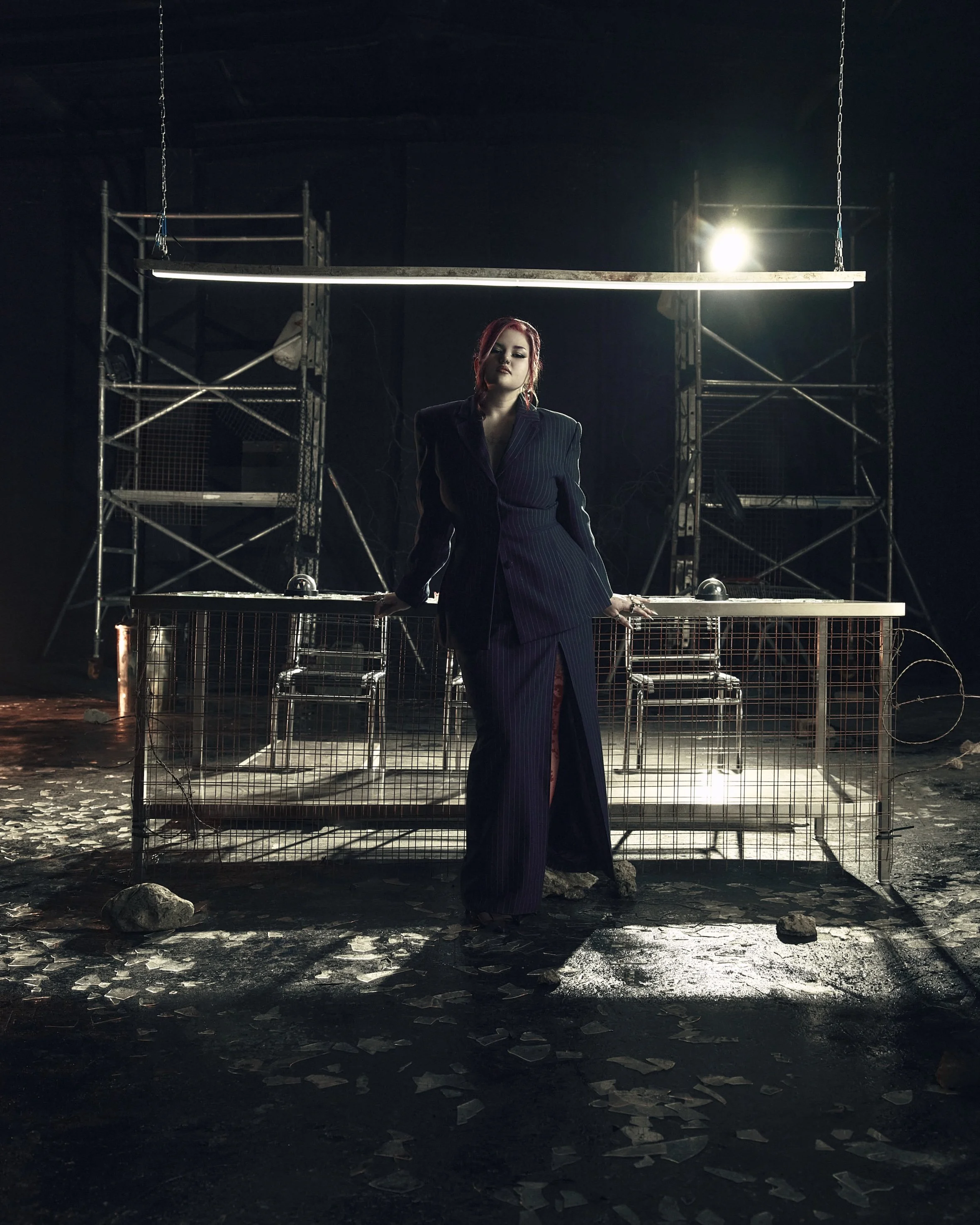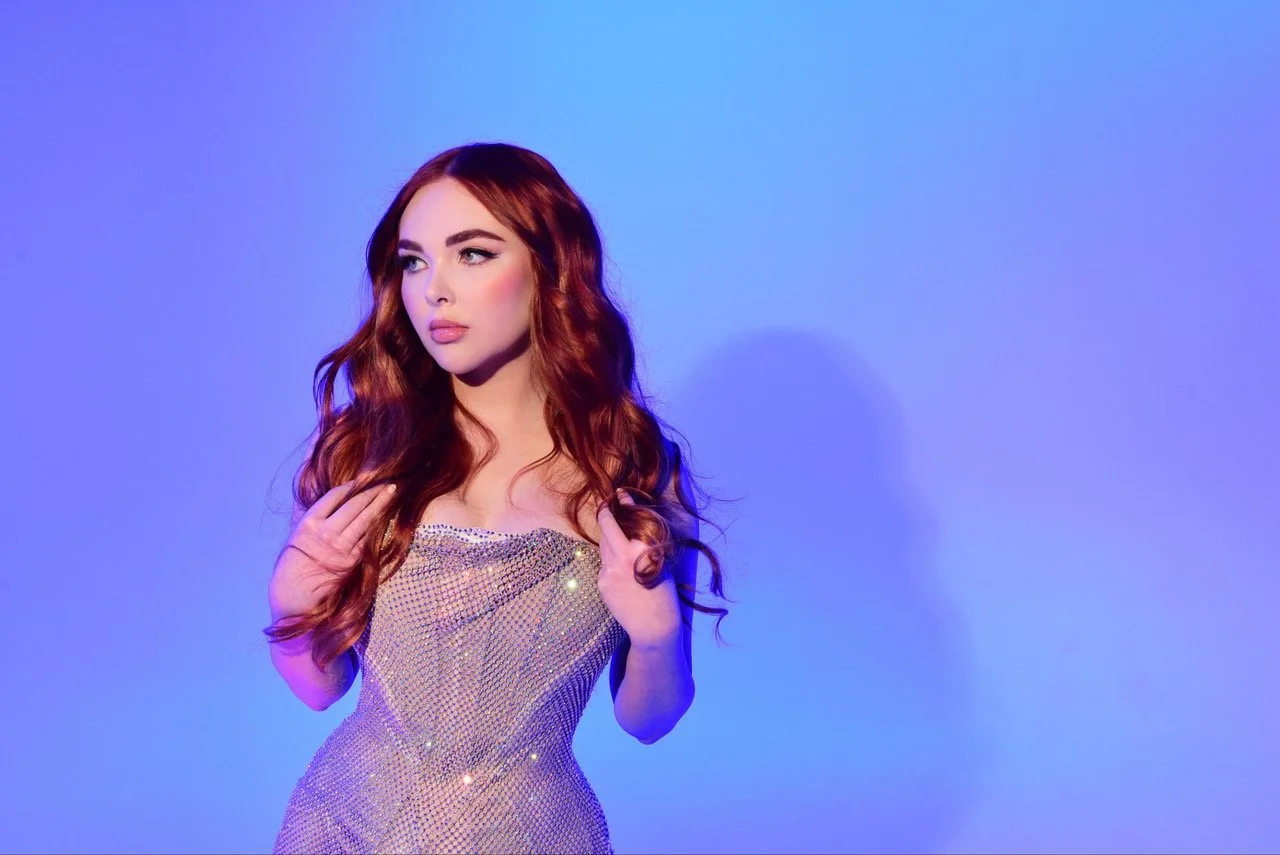
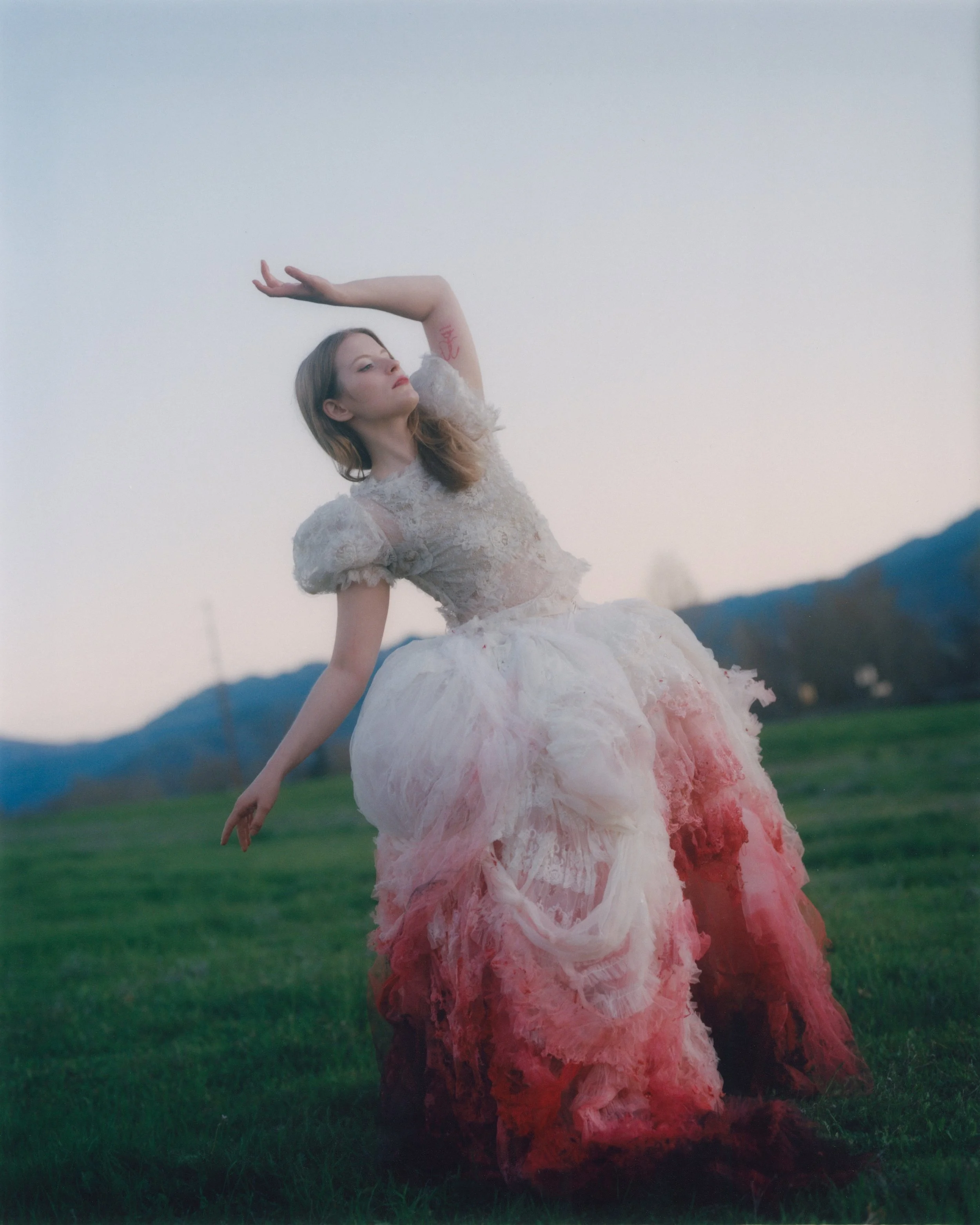
INTERVIEW: Paris Paloma on her upcoming Australian tour, and writing songs with a message: “I came to this career because I wanted to say things and put them into the void”
Words: Emma Driver
Interview: Jett Tattersall
Published: 5 January 2026
When Paris Paloma’s powerful song ‘Labour’ exploded back in 2023, it gave voice to thousands of listeners – mostly women, many of them young – who were angry, and who found Paloma’s words expressed their deep frustration. “For somebody I thought was my saviour / You sure make me do a whole lot of labour,” sings Paloma, before launching into a now-famous section of the song, almost spoken, that has now been the subject of thousands of edits on TikTok: “All day, every day, therapist, mother, maid / Nymph then virgin, nurse then a servant …” Fans sing this part, en masse, at her concerts, in full-voiced protest. Why are expectations of women today still jammed in a medieval history book, they seem to be asking, where men accept women’s servitude as their birthright, and women are condemned to a life of unending domestic struggle?
Paloma is determined to hold these ideas up into the light, drawing modern parallels. Using her folk-leaning musical template and a love of mythology, she explores darker parts of the human experience and embeds them in songs it’s impossible not to sing along to. The twenty-six-year-old singer, songwriter and guitarist grew up in Derbyshire in the English countryside, then studied fine arts at university. “So much of my fascination with mythology and history comes from my study of art,” Paloma told Rolling Stone last year, on the release of her debut album Cacophony. She is also deeply interested in the way women are bound together by common experiences, and uses her poignant lyricism and imagery to smash the old and the new worlds together. There’s humour and irony too – sometimes “you have to laugh, otherwise you’ll cry”, Paloma tells us in the interview below.
‘Labour’ reached the top 25 on the UK charts, and Cacophony hit the top 40. Paloma’s folk is both gentle and stormy, depending on what’s needed for her storytelling, with a light pop touch and imagery that brings her stories a richness of reference. Death always lurks at the edges, too: in ‘Hunter’ – “If I was easy to kill, you would have done it already” – and in the delicate ‘Escape Pod’, a futuristic dystopia set in a flow of backing vocals and delicate guitar: “They shot me off a dying planet / In a tin-sized escape pod / … But there’s no one tuned in from the other side.” It’s a vivid picture of loneliness, with all the more impact thanks to Paloma’s command of her voice, which captures the quivering horror below the surface of the lyric.
And of course, Cacophony also features ‘Labour’, the album’s heart, with a video that introduced a legion of new fans to Paloma’s intensity – and her willingness to physically represent what she writes about. The most powerful sequence in the clip is when her character smashes a pomegranate – often a symbol of female fertility – and eats it like she’s a primal creature, juice staining her hands and face. The symbolism is heavy, but the scene is not difficult to understand: this woman is done with the physical and emotional torture of her labour (“The capillaries in my eyes are bursting”), and she’s now willing to smash every expectation of her role, no matter the cost. No wonder the song resonated so widely and profoundly.
Latest single ‘Good Boy’ pulls no punches either. Introduced with a spoken line by Emma Thompson (see our interview below), it’s a takedown of the powerful men who behave like spoiled children while they stomp all over the planet. It’s a song about “the men that I am afraid for, the things they choose to believe, the people they choose to uplift”, she told Dazed on its release. Menacing rhythms on bass drum and toms, plus chanted vocal layers and effects – including barking dogs – underline everything these men have lost for themselves: “We’ll have our joy, but it will never be yours.” Instead, they are left with “wagging tails”, wearing collars like the faithful terriers they are.
In January 2026, Paloma heads to Australia for the first time, for a run of theatre shows, appearing at the Sydney Festival and other dates around the country. From there she embarks on two months of stadium gigs supporting Florence + The Machine in the UK and Europe, which she is “beyond thrilled” about. There’s little doubt that the Florence crowd will welcome Paloma’s wordsmithing and musical muscle with open arms.
Ahead of her tour, Paris talked with Women In Pop’s Jett Tattersall about touring, the ideas that flow into her writing, and how anger and humour are both central to her music.
First, Paris, I want to thank you for putting the most wonderful music and visuals out there. There’s so much fun in the witchery that you’re creating, and it’s so welcome – it’s just beautiful.
Thank you very much. I think you’re the first person to describe it as fun, which I love. I think when you talk about quite heavy things, people miss [the fact that] what you’re actually doing is joy, in giving space to girls and people who want to want to experience it, instead of being angry at the world all the time. So I really appreciate that. Thank you. It is fun!
When you’re a young woman, you can feel quite powerless, so you go to esoteric things to find that power, and it’s fun and empowering. That playful, quiet authority you have – is that something that has always been with you, or something that you’ve consciously leaned to, because you’re dealing with subjects that are quite rage fuelling?
I think girls are so funny, and I think we collectively have such a great sense of humour, because you have something that bonds you together, and a sense of camaraderie. You know, you’ve all been on a terrible, laughably bad date with a with an entitled dude, the sort of [experience] when you have to laugh, otherwise you’ll cry. And I think that’s where the humour comes from, the satirical element of what I do.
With ‘Good Boy’ especially – reading comments [online], the jokes kind of write themselves. There’s a great deal of irony in the things that I observe and then choose to write about, but ultimately that that humour comes from frustration. It’s like, “I can see this so clearly. Why can’t you?” In future work that’s yet to come out, there’s a great deal of humour directed towards myself, satirising my anger. I think it all comes from frustration reaching a breaking point, and then you just find the humour in it with other people.
There has to be humour, there has to be the reflection of self. There’s only so much shouting one can do …
Yeah, I also think of that Margaret Atwood quote: “Men are afraid that women will laugh at them. Women are afraid that men will kill them.” I totally weaponise that. If [laughing at men] is what we have, then I’m going to fucking use it, especially when it comes to subject matter that’s the result of years of feelings of powerlessness and frustration and voicelessness. I came to this career because I just wanted to say things and put them into the void and have someone hear them. And I’m at a place now where that is happening, and it is so much fun hearing the voices back. In ‘Good Boy’, there’s a huge amount of irony and humour behind it, because it was all just so obvious to so many girls everywhere. It was a good-faith attempt to call in a lot of guys who don’t seem to see that irony.
What’s the reaction to ‘Good Boy’ been like? Has that song landed differently with another strain of audience, possibly men who may have otherwise disengaged?
Totally. I’ve had so many really wonderful comments from allies, from fathers and brothers and men in the community who are fans of mine, who are who were using it to call out to fellow men who take songs about women’s experiences as some kind of attack on masculinity. There’s been an overwhelming amount of support from men like that. For other men, it just goes straight over their heads. And that’s kind of fine. There’s a sweet spot you want to be in where it feels like you’re saying something worth saying, and if it helps one boy articulate something to another male friend who might be going down a red pill pipeline, then it’s succeeded.
‘Good Boy’ also has that glorious introduction from Emma Thompson. How did that collaboration come about?
There is something about Emma’s voice that elicits an immediacy of reaction in so many women who know her – her humour and her exasperation. She is a very direct person, as is her wonderful daughter, Gaia, who is how I know Emma. It felt so important to me to do a spoken-word intro, to just set the tone of the song and come out the gate with something quite cutting. And I knew from the start it was going to be the title from Rebecca Shaw’s article [in The Guardian: “I knew one day I’d have to watch powerful men burn the world down – I just didn’t expect them to be such losers”]. I genuinely couldn’t imagine it in a voice other than Emma’s. I just needed that combination of the humour, the exhaustion, the exasperation.
I asked Gaia, “Do you think your mum might be up for this?” I emailed Emma with it, and she was just all in. She recorded it twenty times, but it was perfect. I’m so happy with it.
It’s so perfect. And again, it really sets that tone: “This is a serious topic, but we’re gonna have a laugh here …”
That’s my laughter [on the track], and Chloe’s laughter – the wonderful producer [Chloe Kramer], who produced this track with me and Carrie [producer/musician Carrie K]. I was directly thinking about that quote about weaponising women’s laughter, because it’s all we have sometimes to exercise power over those who would exercise power over us constantly.
When you approach your own songwriting, do you make a purposeful choice to craft these messages about the things you’re angry about?
Yeah, I think I’m a very direct person, and so I spend a lot of my time writing just putting myself in the shoes of who I most want to hear [each song]. A lot of my songs are addressing someone. That is who I am – I’m that person who has arguments in the shower with imaginary people when I’ve not been quick enough to think of what to say. It’s this cathartic exercise of saying, “If I had the floor, what would I say in order to get my voice heard?” And that ends up being what the song is. Sometimes they address a different iteration of myself, and sometimes it’s faceless people behind screens. Sometimes it’s men that I’ve known but couldn’t say things to their face.
I’ve not always been as direct as perhaps I am now. I don’t really see any point in arguing with people. I just want to be honest in terms of what I believe is true, and try to convey that. And also, you know, I talk a lot about the person that I’m hoping will hear it, who’ll think twice before harbouring misogynistic views and tendencies. But it’s all a catharsis. That someone has articulated something that you’ve been dealing with for god knows how long, and will deal with for god knows how long, is the most important thing.
Who were those voices or artists, or possibly even writers and poets in your life, who articulated ideas that resonated for you?
I became a huge fan of Hozier in my late teens. I just loved the directness and the poetry of his work, and an urgency that really resonated with me. I thought, “That is someone who understands the purpose of writing.” And I didn’t even understand the purpose of writing at the time. Sometimes I still don’t …
And, you know, people like Aurora – she is such a singular character who has the exact same thing. There’s a purity and a power in what she says, because she pursues honest, truthful writing and art and music, which shows community rather than division. And I just think those are two of the most singular, powerful voices that I have had the privilege to be a fan of, when I was coming into my own as a young adult and a songwriter.
Both of those artists also have a visual side to them – as you do – and they create particularly strong sound aesthetics. I feel with your songs, they need to be heard as well as read. When creating a song, do you have those audio elements in mind?
Instinctively I’d say yes, mainly because I’ve never really written poetry, and when I songwrite, I do it audibly. I don’t sit and write something and then put it to melody. There’s something very instinctive about sound moving through the body that’s very self-soothing. It feels mundane but also ancient. And I think that’s where my almost primitive love of songwriting comes from. I love poetry. I think poetry is incredibly moving. I just don’t have a talent for it when it’s not songwriting.
Your music is really charged with ideas about witchcraft and ritual and myth, which carry such historical and political weight. Do you think that folklore, that power that women have, is needed now particularly?
I read a book last week, called I Who Have Never Known Men [by Jacqueline Harpman]. It’s about all these women who are on this desolate planet and they can’t remember the planet they came from. And when one of them dies, they recite – in a muddled way – funeral rites and old Christian prayers that they don’t even know the meaning of. And the narrator says that in times of death, “in the face of horror, ancient rituals regain their meaning”. And they do.
So I wanted to give weight to a feeling that you experience every day – whether it’s anger, powerlessness, helplessness, frustration – that becomes an institution because of how many women experience it. And that’s where we see women coming together, whether it’s [through] folklore, pagan practices, witchcraft, Wicca – there’s an impulse to give it a name, because I think the powerlessness and the suffering is so universal, from very young girls to very old women. And I think it comes down to community, and wanting to give weight and reverence to that – not to the suffering, but to the endurance and the power of these women that doesn’t have accolades or titles.
That’s so beautifully put. Australian audiences are about to experience all of this in your music, live, for the very first time. How do you feel your music changes once it leaves the sphere of the headphones and moves out onto a live stage?
It very much comes alive in a different way. There’s a really overwhelming sense of community that I’ve experienced at every show I’ve ever done, from when the fan base started growing and uniting in their experiences and their empathy with one another. We call them the “fairies”, a name that was given to them a couple years ago when they spontaneously started holding hands and dancing in circles after shows. That’s a tradition that I hope the Australian fairies will also keep. I had no idea why that started happening, but it was just this impulse for people to dance together … not just girls – it’s such a rich and wonderful fan base of people from different gender expressions. It’s such a such an absolute joy to witness.
I used to be absolutely terrified of performing … but now it feels like the most distilled part of what I do, because there’s nothing in between me and the people who are listening.
I would guess there’s a real shock that comes with realising, “Oh shit, there are actual people here …”
It’s so strange! Nowadays, things are astronomically reduced to numbers and binaries and streams, and that is so boring and isolating. But it’s the absolute highest honour to see something you’ve written bringing people together.
Your music’s just so exciting, so thank you so much. It’s been a pleasure to talk to you.
Thank you so much. This is lovely.
Paris Paloma’s latest single, ‘Good Boy’, is out now. You can download and stream here.
For Paris’s 2026 tour dates in Australia, the UK, Europe and the US, go to www.parispaloma.co.uk/home/#tour
Follow Paris on her website, Instagram, Facebook, YouTube and TikTok