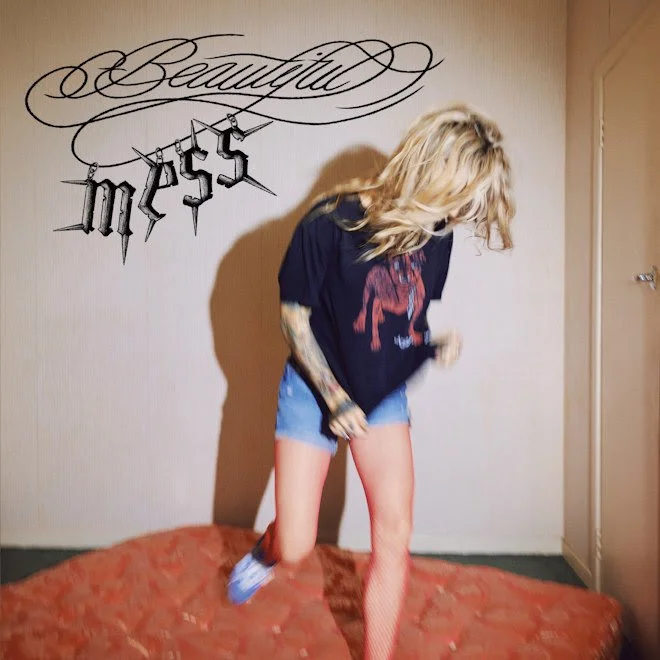
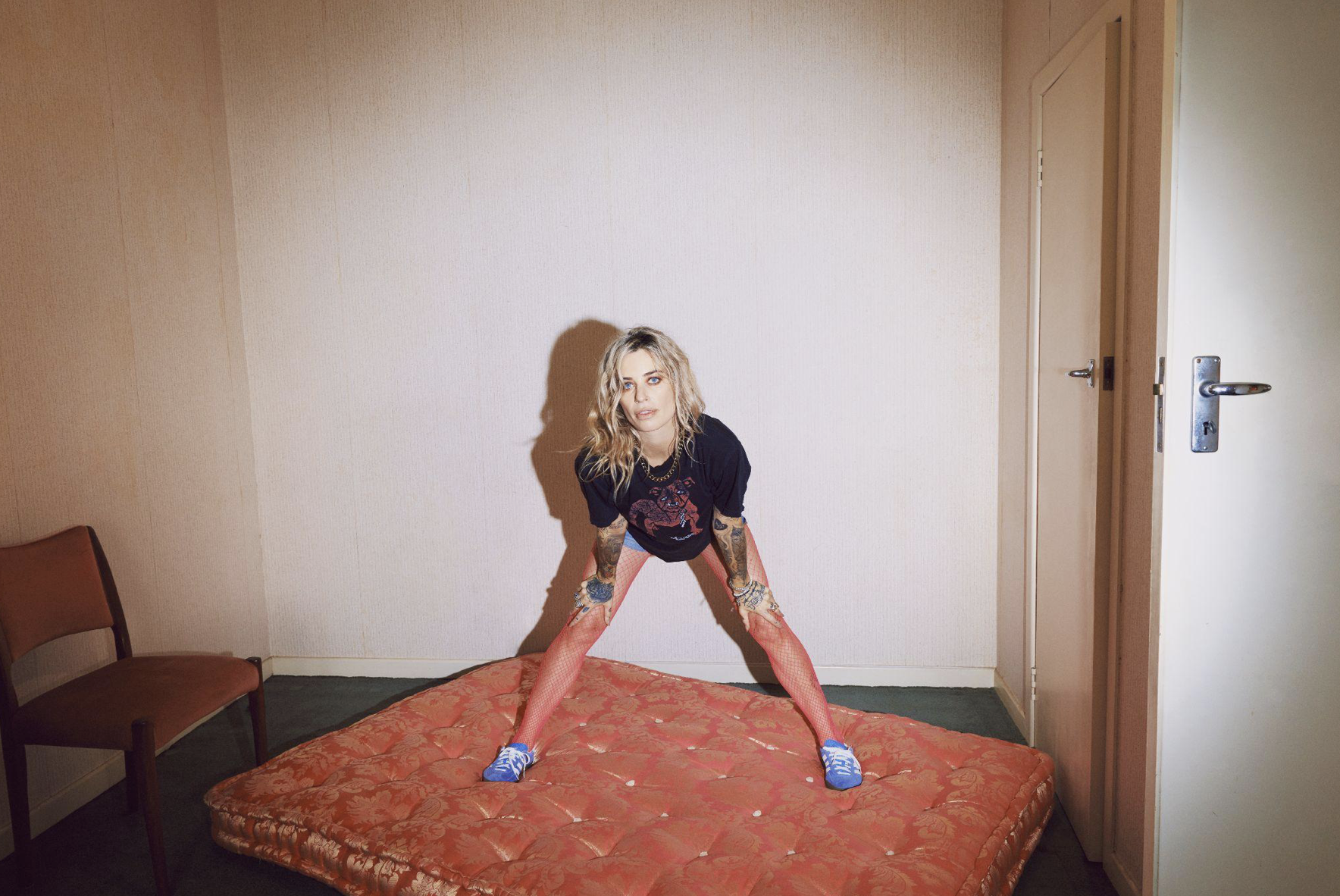
INTERVIEW: Gin Wigmore on her fourth album 'Beautiful Mess': "It feels like it needed to come out now. If I'd done it any sooner, it wouldn't have been the right story to tell."
Words: Jett Tattersall
Interview: Shalane Connors
Published: 29 July 2026
It's been eight years since Gin Wigmore’s Ivory cemented itself into our playlists: an alternative blue-eyed soul charmer laced through with romance, strength, and bone. Eight years of growth, often courageously plucked from the rubble of collapse. “I'm really proud that I haven't let courage disappear,” Wigmore says. “Not only have I not left it, I've let it drive.”
Yet, for all the ground she’s covered, there’s a self-aware return to adolescence in Wigmore’s Beautiful Mess, her fourth studio album.
Entering her forties after years of seismic personal, creative and geographical shifts, Wigmore steps back into the emotional headspace of girlhood and alternate lives to process where she is now.
Separated into two discs, ‘Beautiful’ & ‘Mess’, its opening half, ‘Beautiful’, is for the ears what it says on the tin. Patient silences, warm pedal steel and melodies brush against the tear ducts of country and Americana. Tracks like ‘Hollywood’ offer a glance into the past, pairing a tune of yore with lyrics recalling her move to LA, the promises made, and the loneliness that ensued in living the dream. ‘Postcards never seem to get to you in time/Don't you worry I won't lose myself’.
The gentle note slipped into a locker, ‘Our Street’ — a goodnight and goodbye of a song — feels as though it was written on the walk home, and all the better for it. Lead single ‘Country Diamond’ opens with Wigmore’s alt-rock rumble before shifting, two-step, into the chorus, drowning us in a '60s soft-focus haze born from a daydream about someone who left fingerprints on her heart.
Neither half is interested in recreating an era. But both channel music of the past to saddle the emotional language of Wigmore's present.
Disc Two — the 'Mess', as Wigmore delightfully calls it — could soundtrack an irreverent mid-'90s coming-of-age film, where every emotional revelation and first kiss arrives beneath a wall of distorted guitars. Except the protagonist is full grown, and discovering that shared glances and butterflies don't become any less ridiculous, or any less intoxicating, with age.
‘I think you’re really cool, I just gotta be your girl / Can I take you for a twirl?’ Wigmore purrs on ‘I Like It’. The “dance baby dance I think you’re pretty wild” lyric is just delicious — pouring from the mouth of a grown Wigmore to the pretty beau in her sights, it flips the script on desire into something joyful rather than possessive. .
‘Here Come The Girls’, the album's closer, initially wears the clothes of a pop-punk love song before revealing itself as an ode to the women who held her together through the last decade's upheaval and brought her back to herself. "I found my missing pieces, and they all led back to you."
The beauty of Wigmore's Mess is that, beneath its crushes and caught breaths, it becomes a story about finding herself.
Perhaps that's the addictive pull of Beautiful Mess. It's an album from an artist we've grown alongside, one making peace with every version of herself she's ever been. The mess remains. And it's absolutely fucking beautiful.
We recently met with Wigmore to chat more about the creation of Beautiful Mess.
Hi Gin! Congratulations on Beautiful Mess, your first album in eight years! How does it feel to have it out?
Oh, so fucking good! You know what? It feels like it needed to come out now, though. If I'd done it any sooner, it wouldn't have been the right story to tell. It would have been premature in what was needing to be said. The last couple of years in particular have been particularly insane and chaotic and heartbreaking and loss and grief and all these things. Divorce and moving country and all of that shit, and I needed to tell that part of the story as well. Otherwise I just would have put something out and then been clamouring to do another record straight away to tell these stories.
How did the album come about, after being away for so long.
That's an interesting one. I had this record that I'd done about five, six years ago, where I took a chance on one of my good friends who was in a band. We’d been writing together for ages, and he really wanted to produce an album, and I was like, cool, let's do it together. We got 98% there, we were going to mastering, and then some shit went down, and he decided that he was actually deeply in love with me, had been for years, and wanted to run away with me! He was married to my manager as well to make things even messier. So that imploded and they got divorced, and I was like, oh my god, I've lost my best friend, my producer, my writer and I've got to continue to be managed by his wife. She was dope, and we made a pact we weren’t gonna let that dude destroy our situation, but then two years went by and the best thing to do was to part ways with my manager as well.
But I couldn't touch that record that I'd made with him because it had a flavour, we'd had all these moments that I thought were safe, intimate, vulnerable moments, but when I looked back on it, I was like that could have been seen a completely different way if that other person was having their feelings. I just got got the ick on the record. It was such a betrayal. You can't help people having feelings, but it just broke my heart in a way, and I couldn't figure out how to reconcile everything.
So I went to all kinds of other shit. I bought a hotel, I was just running from my problems and not being able to be an artist. It was my guitarist that said to me, "Gin, are you gonna do music? What the fuck are you doing?” I was living in Palm Springs at the time, and most of the eight years is me just doing a whole bunch of other random shit, like looking after some really wealthy person in Hollywood's house. I was doing all kinds of weird shit, interior designing, staging houses to be sold. I was trying everything to run away and fill the void that I was missing from not doing music.
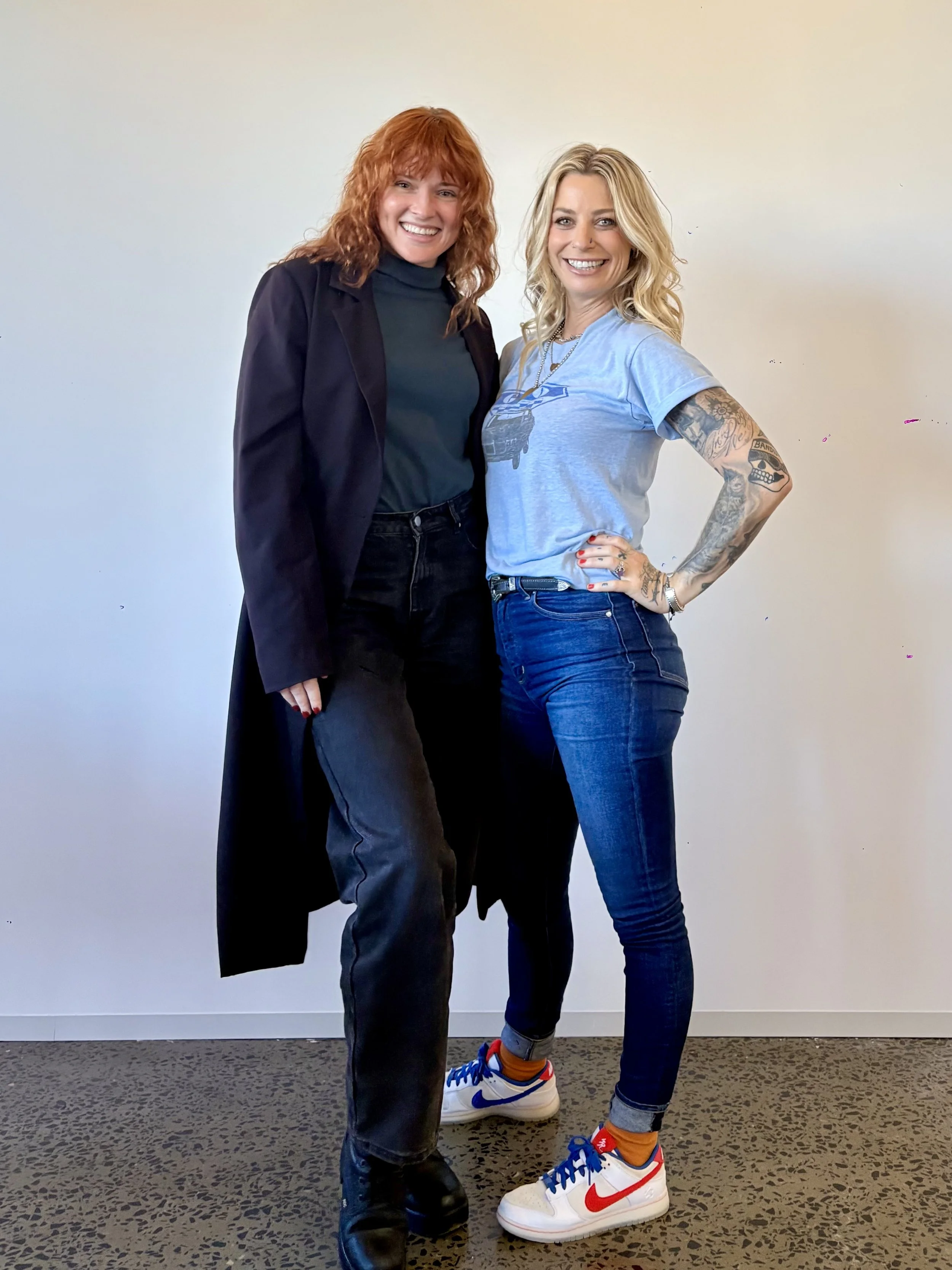
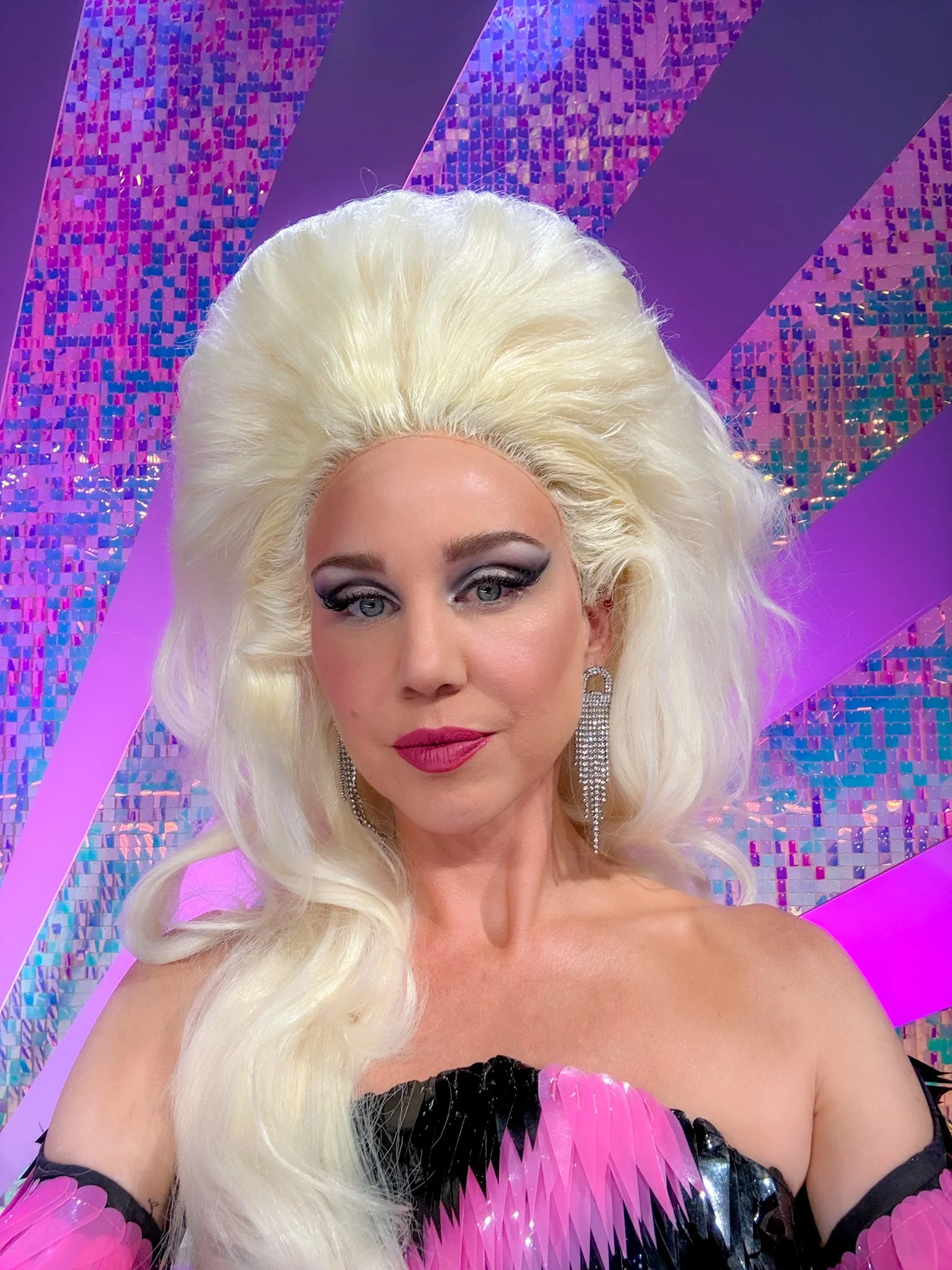
Women In Pop’s Shalane Connors with Gin Wigmore
Talk to me about the decision to release it with a distinct A side - ‘Beautiful’ and a B side - ‘Mess’.
I spoke to my guitarist and I said the only way I could get back into doing some music is if I do something that's really terrifying, that I've never done before. We spoke about what that would look like, and I was like I think it's going to the desert because that's my happy place, and I want to make a record in seven days. Short, sharp, done with two of my tight friends. I want the three of us to play all the music. Seven days, we cook up whatever we can, and see what we come out with. That was awesome, but again, that got shelved in my brain because I left my husband and then moved back to New Zealand after being in LA for 14 years. The way it became ‘beautiful mess’ is because that record I made in the desert in seven days was all the beautiful stuff, and I didn't know how to have it sit with the previous album that was really messy. So in my head. It had to be realised as a side A ‘beautiful’, and a side B ‘mess’. Together they complete the whole story that is the last eight years of absolute up and down, sideways, psychotic chaos.
It’s a real dichotomy between light and dark.
And to tell that story has been really cool. We can really play with light and dark, and that to me is interesting. That's art. That's trying shit you haven't done before to tell a story in a way that feels genuine and authentic to your story. That's interesting for me, and that keeps me interested. And I think that's the hardest thing when you’ve been in a career so long is staying fired up by it.
It's interesting that you've taken such a big break, which is such a dangerous beast in this industry to step away when you have an upwards trajectory. You run the risk of losing your following, losing relevance, whatever that is, but it seems like it's really reinvigorated you.
I think I needed to find what makes me excited about it again, and have something decent to talk about. I can't live in vague grey space, I find that shit so dull. I'm an intense person, and it's extremes. It's either I'm not doing it or I'm full 100% doing it. Until I have something worthy enough to go all in on, there's no point. It's just wasting everybody's time. So this was a piece of art that I could actually carry, and it had longevity and sustainability to talk about it here with you, to play it, to tour it, to do the journey of it.
I saw a really cool post on your socials where you went to the record pressing factory and actually witnessed your record being squished and moulded into a tangible object. How surreal is that to have kind of eight to 10 years of experience squished into a record?
Oh yeah, that's really cool and it's a trip to be honest. There's so much life and experience that has happened, and then, as you say, for it to be all just boiled down to a squish of vinyl stuff that gets made into your body of work, it's strange. But at that point, the hardest part has been done, it's taking on its own life now, and I liken it to raising a kid. The hardest part is having it all marinate and be made in your body, and being open to those experiences, and then when you birth this thing, it's got its own legs. It's got its own life. You hope that you've raised it to be independent enough to know how to stand on its own two feet. That's when you know whether a record is successful or not, if it's got the legs on it to go the distance and to resonate with people.
But at that point, it's out of my hands. Art is subjective, and it's not something for me to worry about anymore. That's something that I put very little, if any, importance on. I remember when I made my second album after my first album did pretty well, everyone was like, "Oh my God, are you worried about the second album thing?” I was like, no, never, because every album is its own person. It’s own beast, It's its own painting, it's its own art. It's a disservice to compare. It's my story, and honestly, people can love it, hate it - do it. Have feelings about it.
I love that. Do you get nervous, or feel vulnerable at all?
No, never. Don't worry about that shit. You’ve got to live in your own story. You can't live for somebody else's thoughts or feelings about you, or what you're trying to tell. That's their life. That's something that I think comes with age and wisdom, and also just coming into your own and feeling confident. That's a really cool part of life that I'm coming into now. You've seen a lot of stuff and you understand. I'm in a new relationship now, and you learn that acceptance for people and how they're doing their life is so much more peaceful than trying to fight change on someone else's journey. It just makes for better relationships, makes your career better, everything.
I feel like what you just said is resonating in your recent move back to New Zealand.
Yeah. I love riding horses. I was riding horses in Tucson, Arizona, and I remember getting off the saddle, and I called my brother. I was having this pang of wanting to go back to New Zealand. He was in the States, and he moved back to New Zealand, and he said ‘well, what's stopping you?’ I've spent all this time in the States, and I felt it would be a failure coming back to New Zealand. He said, ‘Well, I think it's probably time for you to redefine what your idea of success is. Your idea of success has probably changed since you were 25. Write that down, and if those things embody a place like New Zealand that's probably a successful place to be.’ And it was, and I was like, that's so fucking on point! So now I've redone my idea of success, and the environment for me to be successful in is in New Zealand at this point in time. I feel really content about where I am at, and I feel my power in my hometown.
That's amazing. You have quite a distinctive sound, and the biggest part of that is your vocal quality. You've got that kind of pack a day, whiskey tone going on. Who were your biggest influences in your formative years, or did you literally smoke a pack a day?
I think I wanted to! I definitely gave it a good shot. I listened to some weird shit, honestly, I listened to my parents' record collection, and luckily my parents had good music, but I was definitely the weird kid at the parties. I'd hold parties at my house, and I'd be playing John Denver and Billie Holiday and Edith Piaf to 13 year-olds. They were just like, ‘What is this shit? We want Aqua and Spice Girls.’
I was listening to all the storytellers, David Gray’s White Ladder was my first major album. My sister bought that back from the UK, and I was just floored by it. I thought, the way I sing feels similar, maybe I'm not such a weirdo There's still a lot of safety and security that comes from listening to that music. Still to this day, I'll put on Billie Holiday, and my whole nervous system just resets. There's something that really resonates with me and that kind of music.
Having been away for quite some time, coming back into it, do you think anything's changed in terms of how you're treated as a woman in the industry?
It's interesting. There's such a trap to become a yes person and be so compliant and lose your sense of self. Become overly sexualised and sort of a puppet because that's easier for people to manage. I got into music because I wanted to be myself. I was a misfit growing up. I was always in trouble, I was always trying to skip school. I never saw the importance of it. I was always just the outlier, and that's the community that I found within music. That felt like the right tribe for me, and so then to be sort of governed by this rulebook on what it is to be a woman in music felt so fucking out of place for me. I was like, wait, hold up, I can't be myself? I have to be all sexy now and say yes to things I don't want to do? No, fuck that. When I hung out with Butch Walker, that was the best thing that ever happened to me. I made the Gravel & Wine album [with him]. He was this grimy, greasy Los Angelino, tattooed, on a motorbike, drinking red wine guy, and I was just like, damn, this dude's so fucking cool. That's the vibe, that's the sound, that's the lifestyle I want.
Did you have to fight to be able to represent that?
Fuck yeah. My label was like, ‘what are you doing out there with Butch? We need to check in daily’ and Butch picked up the phone and said, ‘we're making a record, call us in 30 days. We'll be done then’. And that was it. We shut out the label for a month, and we made this record.
The thing is we delivered. That record was really successful, we were trusted with doing what we said we we set out to do, and that was a really defining moment in me going I'm not gonna play that game of what I'm supposed to. It worked really well in New Zealand and Australia, but in the States you really do have to toe the line a lot, which I found quite hard. Then you get labelled as opinionated and hard to deal with, which I think is so fucked because I don't see men getting the same thing. There could be multiple bands that sound similar and are still allowed to have their own name in lights, whereas women back in the day would get compared to one another, and you had to choose your favourite one. think there's enough room for everyone to have their space and music. There's enough hours in the day and hours in our lifetime to listen to all kinds of music and take something positively from everyone. It's a real shame when people minimise an artist and their life into trying to push it into someone else's life. You're you. Be you. You’re nothing like this person because you're not that person. That happens a lot with women, I don't know why, but it sucks. I think it’s because we take it and it plays on our insecurity as women.
Do you think turning 40 is a new found freedom in that, being able to let all that go?
Yeah, definitely. I mean, I think I did that a while ago, which is probably why my label dropped me! But now they’ve got me back. We've always been in good graces, and I think that's a really important thing throughout anything that you do, but particularly in music, is to always have no bad blood. I think that's actually really cool that me and my label have come full circle, it speaks to the relationship that was there and the work that we did. I think I needed to grow during a certain period of my life, I didn't want to be tethered. I needed to be untethered for that moment of growing up and being.
What's next for you, an album tour?
Fuck yeah! I'll be playing this a lot, I think, for the next two years.
Beautiful Mess is out now via Universal Music. You can buy and stream here.
Follow Gin Wigmore on Instagram, Facebook, TikTok and her website.