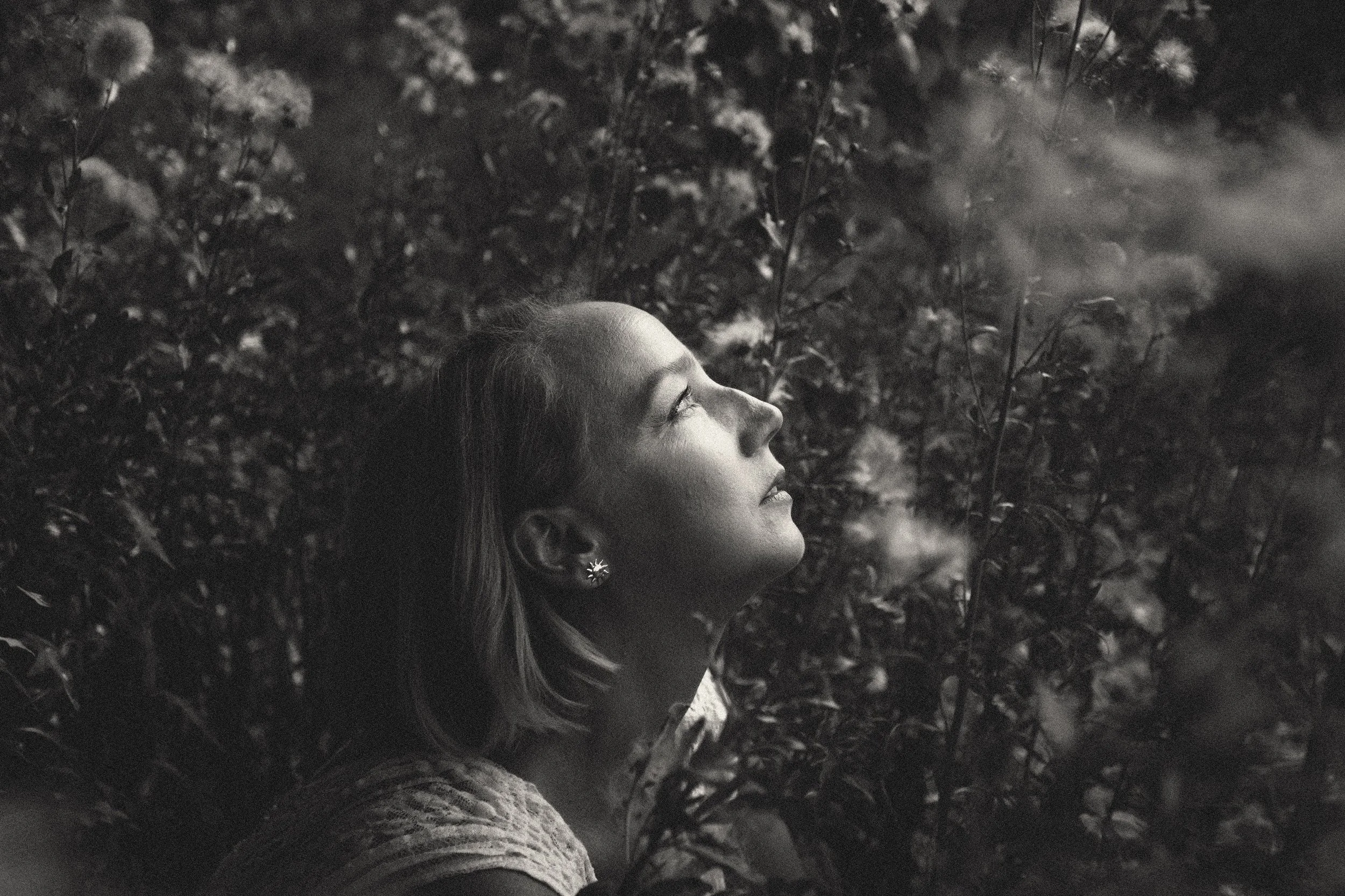
INTERVIEW: Anna Arco on her third album 'Songs From The Past': "I want to tell a story, whether it's my story or someone else's story, and that story tells me how it wants to be portrayed."
Interview: Jett Tattersall
Image: Freja Lindberg
Published: 29 September 2026
Sweden’s Anna Arco is one of those artists who, after just one listen, is hard to forget. Crossing from pop and alt-pop into jazz, acoustic, indie and experimental, Arco has an almost uncanny ability to identify, process, capture and translate human behaviour and emotions in a three-minute song. Listening to her music is an immersive, connective experience that leaves you feeling you have drowned in every emotion you have ever experienced – in the best possible way.
A talented and gifted musician, Arco earned a master’s degree in jazz vocals at the prestigious Royal College of Music in Stockholm and in 2017 released her first single ‘The Ocean’. A mellow indie pop-rock song, it was followed by a swift sound change with the dark electronic single ‘Dagger to the Heart’. Her debut album Songs Within the Spectrum arrived in 2019, and her second Sad Secret Songs in 2021.
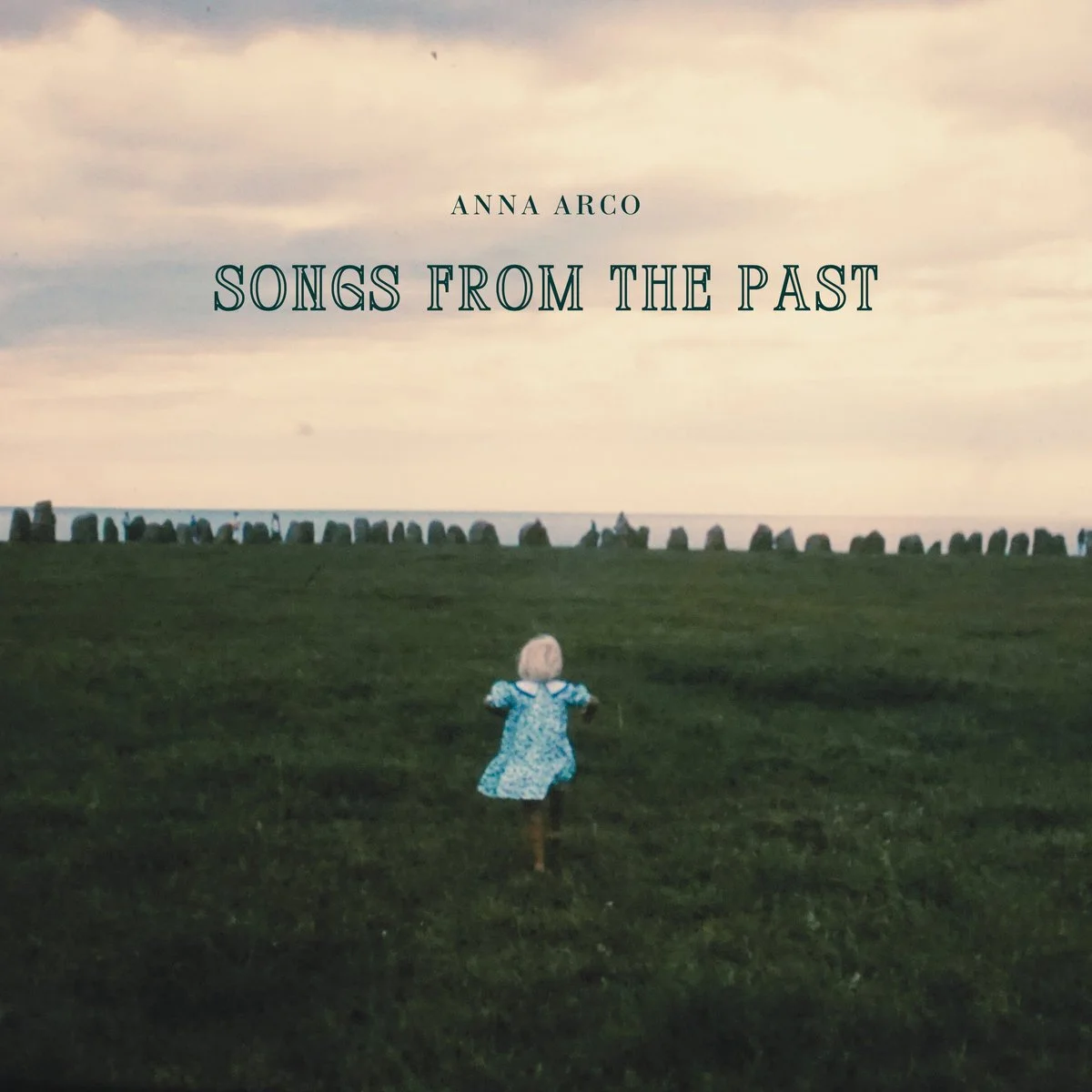
At the beginning of September, she released her third album Songs From The Past. It is an album that Arco never intended to make, but when she hit a creative wall with the original album (titled Songs of Sins and Scars) she chose to switch paths. Revisiting songs set aside in earlier projects, Songs From The Past sees Arco deliberately shift away from her previous alt-pop sound into pared-back, warm acoustica.
The album explores love, loss, grief and life, with Arco’s talent for crafting meaningful lyrical stories on full display. First single from the album, ‘Grasp’, is a tender piano-and-guitar ballad that grows in intensity as Arco explores the feeling of having your world collapse just when you think a relationship is in the perfect place: “Just as I feel like everything falls into place / You drift away, far into space.”
A similar theme is explored on ‘You Let Go of Me So Easy’, a brooding, haunting song that Arco says is her personal favourite on the album. As the title suggests, she sings of the pain of an ex-partner pushing her out of their life with ease, while she struggles to cope. “I fell, and fell apart … Till nothing else remained,” she sings, and in a powerfully melancholic moment the reality hits like a truck: “Your heart was beating faster / With a beat I never knew / A vivid, chiming melody / That broke my heart in two.”
‘Twenty-Eight’ sees Arco play with a country sound and train beat (a specific drumming technique) for the first time in her career. While the sound may be new, the lyrical content revisits a topic Arco has spent years working through in her music – grief. In 2018, Arco’s best friend Natalie Migdal, a respected violinist and composer who also released her own music, died suddenly aged just 28. The grieving process was captured in Arco’s album Sad Secret Songs. ‘Twenty-Eight’ explores what grief becomes almost a decade after the event. There is survivor’s guilt – “You were 28 the year you died / I was 27 but I survived” – but also the acceptance that the one we love will always be with us: “Through the darkness you’ll remain my guiding light.”
‘Wish’ has hints of country against an organ foundation and returns to the theme of heartbreak in devastating simplicity: ‘Please take me back to the part / Where my heart was still in one piece.’ ‘Wolf’ with its gentle piano line hides a darker story of love as Arco sings of a lover that is bad for her…which may actually be not such a bad thing: ‘You bring out the worst in me / And that feels so good for a good girl like me’.
Songs from the Past is a beautiful album that is intimate, brooding, otherworldly, moving, challenging and utterly mesmerising. It is an album you walk away from feeling it deep in your soul, and something you know you will return to again and again. We sat down with Arco to chat all about her music and the creation of the album.
Hi Anna! Your new album Songs from the Past is just so beautiful, there is this real emotional, plain spokenness to your music. I think the word ‘authenticity’ gets thrown around a lot, however I feel like what you have truly is authentic. I'm curious, is it something that you consciously pursue, or is it just the only way you know how to create?
First of all, thank you so much. It's always this way, I don't know another way, because this is just me using music as an emotional outlet, so for this project there's no other way. I am an educated jazz musician, so if I write jazz, or if I write for another artist, I use different tools, but for Anna Arco, it's bound to be authentic.
Your roots are in jazz, but obviously, being from Sweden you are in the epicentre of amazing pop. I'm curious about that influence of the jazz arrangements, even in your pop, or your stripped back context. Do you feel that your jazz roots are the thing that keeps your music operating in its own genre, so to speak?
Jazz isn't really my roots. I grew up listening to, 1960s singer songwriters, as I imagine a lot of people with parents my age, like Simon and Garfunkel and Carole King and the Beatles. Jazz got introduced to my life, when I was 16, just because I had a singing teacher who was a jazz singer. When I listen back to songs that I wrote as a teenager, they are not very different from what I'm doing now. I think I just took a little detour with jazz. It gave me a lot of great tools for composing, for communicating, and being a much more advanced musician, but genre wise, I'm not sure. For a lot of people, and good for them, jazz is a free language, but for me that has not been the case. I felt very limited when I studied jazz, so for me jazz has been great in many ways, but it hasn't been liberating, and I don't think it's studying jazz that made me do this sort of music. It has been more a mixture of everything. I listen a lot to hip hop and Swedish rap. I come from a city where we have very good metal bands and rap artists, and growing up with the 1960s music, studying a little bit of jazz. I think it's just a mixture of everything I've been listening to since I was a kid.
This album is made up of what you refer to as songs left behind from previous projects. Did you preserve any of those imperfections, or instincts, from your original demos and refrain from rewriting, or did the years in between and shifts in desires make you approach them differently?
This is such a good question. I had a teacher when I took my master's degree, and she said that what you're adding to the song should always support the initial idea, and this has been a mantra of mine. It's very common when you work in pop, especially more commercial pop with the co-writing and co-producing, that you lose the core of the song, the point why you made the song from the beginning. You add stuff, and the core gets lost somewhere along the way, so this is definitely something that I think about all of the time.
With this album, a lot of these songs were, to be honest, not cool enough to be allowed on previous albums! The whole story is I was in India last year teaching for 14 weeks, and that was the first time in my adult life where I had routine, waking up at the same time in the morning, being out in the sun, going to bed early, walking a lot, training, exercising, meditating a lot, and also getting a salary every month, which I usually don't because I'm freelance and have been for a long time. I woke up one morning feeling hit by lightning. This idea just popped into my head that this album that I've been working on, Songs of Sins and Scars. I have to put that on pause for a little bit. I'm not getting anywhere. I'm going to do something new. I'm going to take all of these simple ideas for songs, and make an acoustic album where the main goal is sustainability. sustainability, both for me, for the band, for the music. In Sweden, we have an expression, go for the ball that's already rolling. Sometimes the easy way is the right way.
I asked some of my friends, ‘do you want to record an album?’ Everyone said yes. I scheduled a date at this beautiful studio in Stockholm, which is actually Benny Andersson’s from ABBA studio. We rehearsed one day, we rehearsed one more time, then we went into the studio, and we recorded all of these songs on the album on one day. It was the easiest process that I've ever been in. This is my third Anna Arco album, and maybe my sixth or seventh album in total, so experience gains you a lot, but it's also keeping it simple and just letting everything be as it was supposed to be, and not forcing anything.
You are an independent artist, and you have remained fiercely independent throughout your career. What do you feel independence actually costs an artist in 2026 and then on the flip side of that, has your independence strengthened your artistic instincts?
We're living in time where I don't think anyone really understand what's going on at this point. I also feel like we're at the tip where the pendulum is about to move back. There's so much going on with AI and the major labels owning everything, and sometimes I feel like a lot of stuff that we discuss is just a smoke screen. In Sweden, we're talking a lot about the value of music. We are the country that invented Spotify, we invented Pirate Bay, so I feel like it's very difficult to change how people view the value of music. It feels like it's in our blood to think music should be free in Sweden at this point. Maybe all of this AI slop and everything could actually turn the tide for people to actually begin to value music again.
Being an independent artist for me, I don't think I could do it in any other way. At the same time I haven't been actively seeking out labels or management or booking agents or anything, because for me I feel like the most important thing at the end of the day is that I'm working with people who are my friends. I think that if it's supposed to happen, it's supposed to happen, and maybe these people should find you, not the other way around, I'm busy making my art.
But if you choose to be an independent artist who will always choose the art above the money, you're bound to a different life than most people. You're alone, you don't have colleagues, you don't have a workplace, you're your own boss, you have to make every decision yourself. It's a different life. That was really clear during the pandemic. I had friends who just, went to their workplace with their eight colleagues, and nobody got sick, and everything was just the same. For me the pandemic was really traumatic, making me question everything, so it's a challenge, but I don't think I would have it any other way.
I want to pivot a little bit to a couple of the real heart strings here in the album. Your beautiful song ‘Twenty-Eight’ carries the presence of your friend Natalie Migdal beautifully. How has your relationship to writing about loss and grief changed over the years, particularly with this album?
I haven't really thought about this myself, but if you look at the lyrics, it's more acute. [Previous album] Sad Secret Songs was just me trying to keep my head above the water and just surviving. That album is me being in a whirlpool just trying to cope with everything. ‘Twenty-Eight’ has a little bit of if you take one step back and look at everything, you get a different perspective. The grief is ever present, but it's dimmed
I have been writing songs since I was six years old, and this is me coping with life. When I write a song, it's usually what I need at that specific time. I have been writing songs for the last year a lot about hope and grace and finding your way after being lost. As soon as I'm going through something, I go to the piano, and I let it out.
Your prose and your lyricism is beautiful, but it's very precise, and everything lands almost like a goal. Do you feel that comes from having English as a second language? You want to make sure that sentiment, when you translate it, is just brutally effective each and every time.
Thank you so much! I'm always super nervous that I'm like faking my way of writing songs in English, so thank you very, very much. For me almost all of the music I listen to is in English. Leonard Cohen is my songwriting hero. I love the English language, it's so beautiful, and it's much richer. Swedish is also super beautiful, but the facts are that the English language has so many more words than the Swedish, so I love writing in English. It just comes naturally for me.
You spoke about this album being much more stripped back and almost acoustic, but I can't help but hear in your music that minimalism that people often chase is still so rich in texture. Particularly on ‘You Let Go of Me So Easy’, it's immersive, you can almost see that song. When you're putting a song together, are you thinking those textures, and creating a feeling?
Yeah, I do. I was in a co-writing session, me and two friends were working on one of my songs, and for me, as the write, it was super clear that this is a song that's set in a city and it's raining and there were like neon signs and the main character is like running and has feelings of anger and desperation., One of the friends said maybe we could have the bass on like two and four instead of one and three, and we tried it and immediately, we were at the beach in like Aruba, the emotion was completely wrong.
I began thinking about that afterwards, and if you're the one who wrote the song, if you're the one who's supposed to also deliver it on stage, maybe you should have the vision of the song in your head. For ‘You Let Go of Me So Easy’, which is my personal favourite on the album, I wrote that song a couple of years ago, and I've always had this vision in my head of this song takes place in the Mexican desert, tumbleweed rolling by, it's in the night time, and the sky is full of stars, and there's a rattlesnake. For me, for a lot of the songs I have these visions of where it's set, and this always helps me to create the instrumental texture of what I would like. So for ‘You Let Go of Me So Easy’, for me it's perfectly fine to tell the band that I would like rattlesnake percussion - can you do that?
I love this so, so much! This is your third Anna Arco album, what do you feel, if anything, is a part of yourself that remains constant across each of these three albums?
Wow! Maybe how I view the music. I want to tell a story, whether it's my story or someone else's story, and that story tells me how it wants to be portrayed or expressed. I am just the executioner. I just want to give that story justice, so whether the song becomes R&B or drone or country, that's not really up to me. The song is clay, and I just model the clay. I think that’s something that's present in all of the albums.
Songs from the Past is out now via Spiltan Records. You can download and stream on iTunes and Bandcamp.
Follow Anna Arco on Instagram, Facebook, YouTube and her website.